
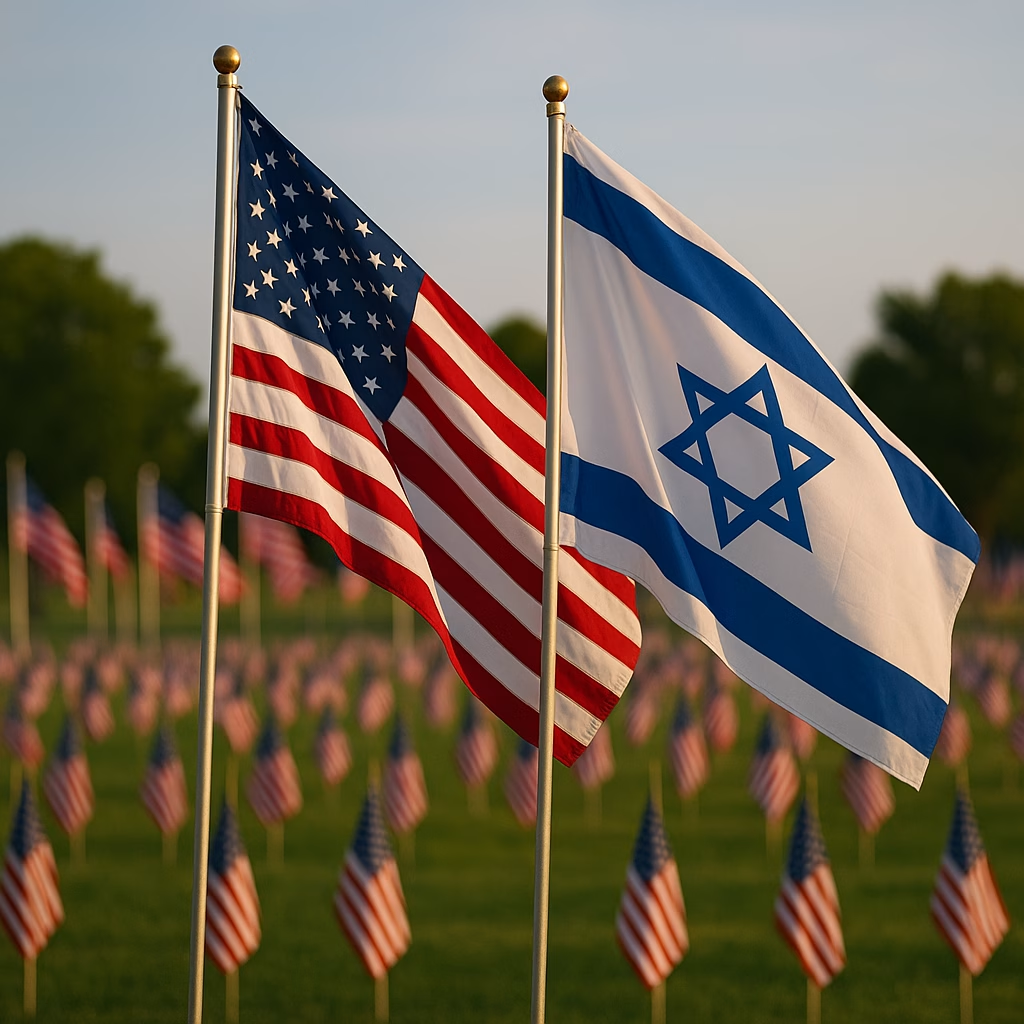
As Iranian missile attacks on Israel intensify, the United States is moving swiftly to reinforce its closest ally’s rapidly depleting missile defenses—highlighting the enormous cost and complexity of preserving Israeli security under persistent threat.
On Friday, an additional U.S. Navy destroyer arrived in the eastern Mediterranean, joining a growing fleet of American warships stationed in the region. These vessels, particularly the Arleigh Burke-class destroyers, are outfitted with sophisticated missile interceptors like the SM-2, SM-3, and SM-6 systems, capable of countering ballistic missile threats at various altitudes. The SM-3, already used in combat against Iranian threats last year, is particularly crucial for intercepting missiles in mid-flight, outside the Earth’s atmosphere.
This move is part of a broader surge in U.S. support, which includes replenishing the ground-based Terminal High Altitude Area Defense (THAAD) systems in Israel—critical for intercepting incoming missiles in their final flight phase. But even with this robust aid, Israel faces a grim logistical challenge: its Arrow 3 interceptor missiles, the pinnacle of its multilayered air defense, are being used faster than they can be resupplied.
Israel’s defense relies on a “layer cake” of systems:
- Iron Dome for short-range rockets and drones,
- David’s Sling for medium-range threats,
- and Arrow 3, which can take out ballistic missiles in space, well before they approach Israeli airspace.
But the Arrow 3’s effectiveness is limited by its rarity and high cost. With supplies thinning and Iranian missile salvos continuing, Israel may soon have to begin prioritizing which missiles it intercepts—an unsettling proposition when civilian lives are at stake.
Prime Minister Benjamin Netanyahu declined to confirm whether Israel’s stockpile is running low, but emphasized that “more and more” defense is always needed. He also claimed that about half of Iran’s missile launchers have been destroyed since the escalation began—part of Israel’s strategy of leveraging air superiority over parts of western Iran to neutralize threats at the source.
Yet this strategy, while effective, does not stop all attacks. Iran continues to target Israeli cities, testing the resilience of both the Israeli military and the nation’s budget—now straining under hundreds of millions of dollars in daily war-related costs.
Meanwhile, the U.S. is balancing support for Israel with broader strategic concerns. Diverting interceptor missiles to the Middle East impacts U.S. readiness for other potential conflicts—especially with China. “SM-3s will start running low at this pace,” warned one U.S. defense official, noting that American missile defense stocks are not limitless.
This situation underscores the stakes not only for Israel, but for American commitments worldwide. Gulf states have pushed for greater U.S. protection amid Iranian threats to U.S. bases in the region. The U.S. now finds itself reinforcing allies on multiple fronts while trying to preserve the capability for future conflicts.
As Israel faces the prospect of rationing its most powerful missile defense tools, the message to the international community is clear: defending democracy from terror comes at a high price—and in today’s world, that cost is measured not only in lives and resources, but also in strategic foresight.
Christians and Jews United for Israel (CJUI) calls on believers, leaders, and concerned citizens to pray for Israel’s protection and for wisdom among its allies. We stand united in advocating for Israel’s right to defend itself from aggression and for peace grounded in strength and security.
“Pray for the peace of Jerusalem: they shall prosper that love thee.” – Psalm 122:6