
By CJUI Editorial Team
In a moment of unimaginable sorrow and moral anguish, Israel is now faced with a heart-wrenching decision: choosing which of its kidnapped citizens to save.
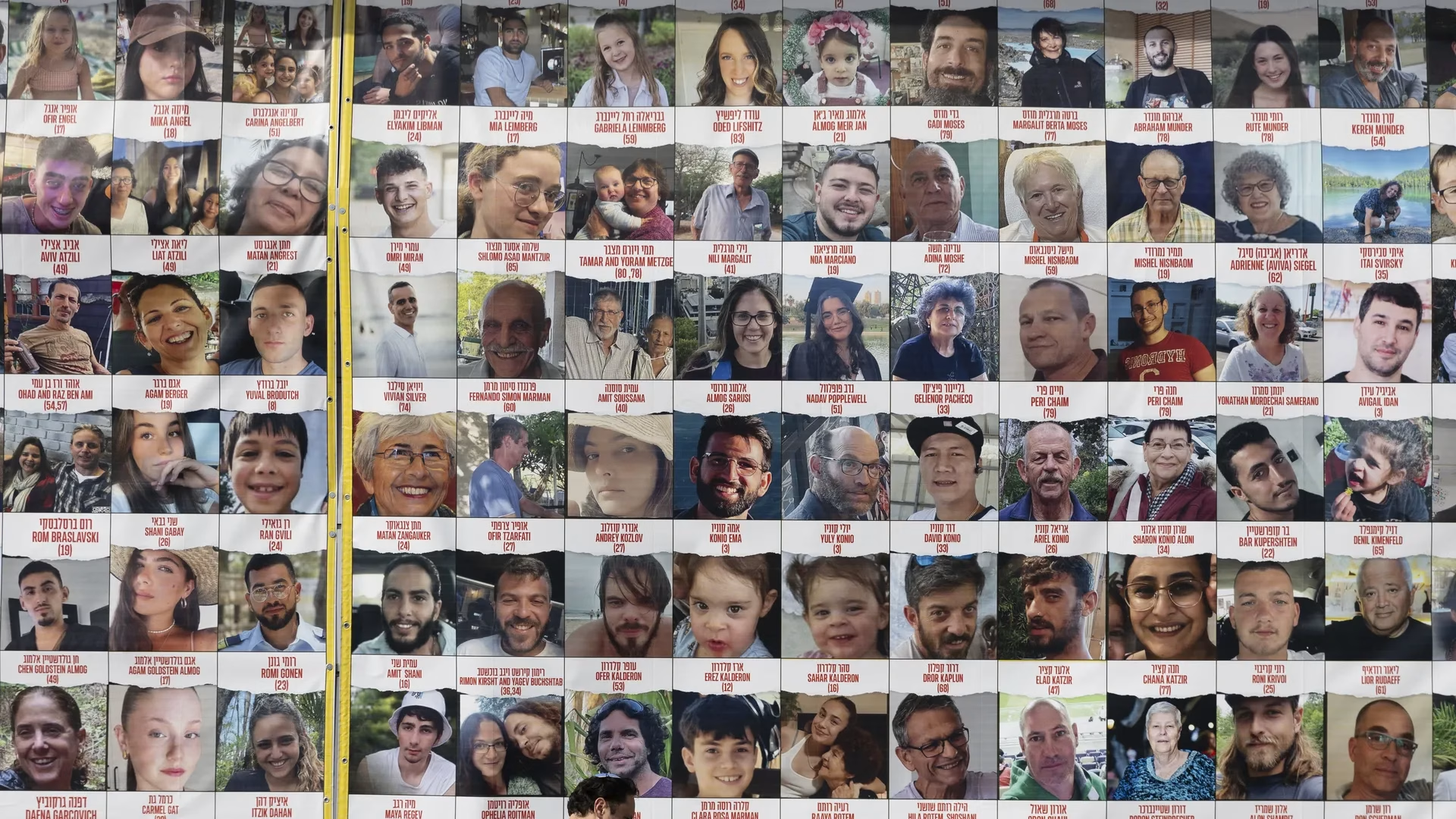
According to recent reports, only 20 hostages held by Hamas in Gaza are believed to be alive. The proposed cease-fire agreement would allow for just 10 of them to be released, alongside the bodies of 18 others, in exchange for a 60-day cease-fire and the release of Palestinian prisoners. For the families of those still waiting in torment, this decision is nothing short of a modern-day “Schindler’s list.”
Anat Angrest, mother of captive soldier Matan Angrest, put it plainly: “I don’t understand how the state can choose who should stay in hell.”
This moment is defining not only for the families but for the soul of Israel itself. The Jewish state has always held the value of Pidyon Shvuyim—redeeming captives—as a sacred mitzvah, a religious imperative. But now, even this eternal principle is being tested under the weight of war, diplomacy, and the brutal cynicism of Hamas.
A System of Selection
The Hostages and Missing Families Forum, representing most hostage families, has condemned the partial approach to deals. “By insisting on choosing partial deals, the Israeli government has created with its own hands the system of selection,” the group declared.
The pain is especially acute because many of the remaining hostages are young men—no longer categorized as priority under previous frameworks, which emphasized women, children, and the elderly. Some are injured. Some are soldiers. And all are almost certainly enduring physical and psychological torment.
For Ilay David, whose brother Evyatar was taken from the Nova music festival, the uncertainty is excruciating. “This knowledge that your brother is still there, still suffering, is really unbearable,” he said.
Ethical Paralysis and Medical Guesswork
Families are submitting medical reports, hoping injury or vulnerability might tip the scales in their favor. But experts like Dr. Hagai Levine, who compiles medical files for the families, warn that reliable data is impossible to obtain. With testimonies and Hamas propaganda videos as their only evidence, doctors are being asked to triage based on guesswork.
“It’s like treating a patient with a heart disease based on his EKG from three months ago,” Levine said.
Trust and Betrayal
There is deep anger, too. Parents of captured soldiers say they feel betrayed by the country their children swore to defend. In Israel, where military service is compulsory, a soldier’s oath is more than symbolic—it is a mutual covenant between citizen and state.
But many feel that covenant has been broken. “My Matan is a soldier, and our country didn’t fight for the soldiers as part of the deals,” Angrest said.
Adding to the heartbreak, the only soldier released so far, Edan Alexander, was freed through a U.S.-Hamas deal—Israel had no part in it.
The Second Stage—Or the Final One?
The current deal being discussed in Doha includes a provision to launch a second stage of negotiations that would end the war and secure the release of any remaining hostages. But many fear this promise will go unfulfilled, as has happened before.
For families like that of Macabit Mayer, whose twin nephews Gali and Ziv are still in Gaza, this moment is one of sleepless panic. Every headline, every phone call brings a fresh wave of dread. “It’s like a nightmare you just can’t wake up from,” she said.
A Moral Crisis with No Easy Exit
For Israel, this is not just a military dilemma—it is a spiritual and ethical reckoning. The choice before its leaders is agonizing: ten lives, when twenty are pleading for salvation. Ten mothers will rejoice. Ten others will fall into mourning or despair.
At CJUI, we stand with the hostage families, in prayer and in protest. We believe the State of Israel must pursue every possible avenue to secure the release of all its citizens. Not one life is expendable. Not one family should be asked to accept that their child did not make “the list.”
And we remind the world: the true villain here is Hamas—a terror organization that treats human beings as bargaining chips and hides behind the suffering it causes. Israel may be forced to make impossible choices. But it is Hamas that created this inhuman calculus.
May we see a day when no nation must choose which of its children to save. And may that day come soon.