
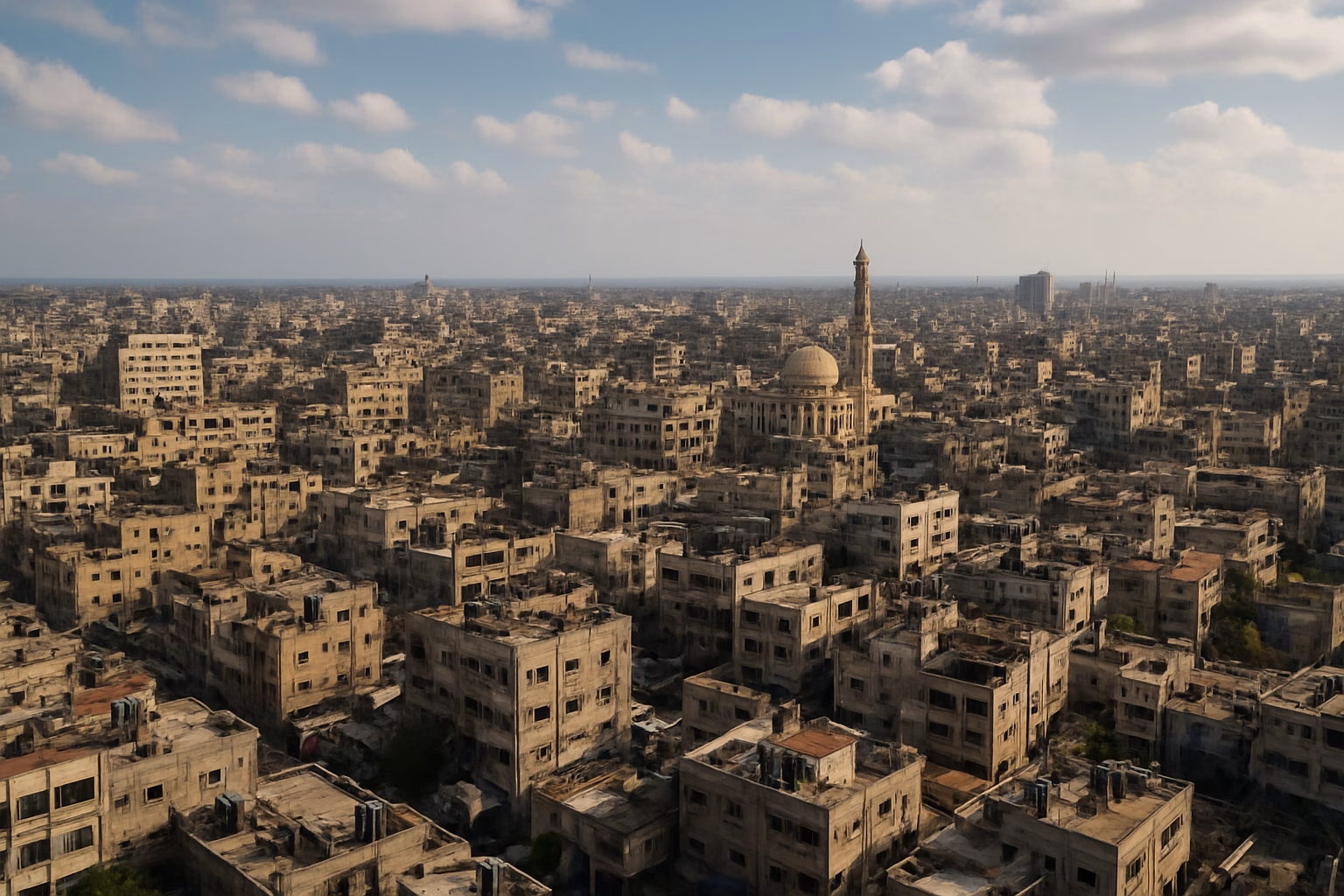
After nearly two years of grueling combat and unrelenting rocket fire, Israel’s security cabinet has approved Prime Minister Benjamin Netanyahu’s plan to take Gaza City — the heart of Hamas’s remaining stronghold — as part of a broader campaign to dismantle the terror group’s grip on the Strip.
The operation, announced overnight Thursday, gives Gaza City’s approximately one million residents until October 7, 2025 — the second anniversary of Hamas’s October 7 massacre — to evacuate south. The timeline is intended to minimize civilian casualties, even as Hamas continues to embed its fighters, weapons, and hostages among civilians.
The plan comes after months of careful IDF advances that have brought 75% of the Strip under Israeli control. Gaza City and several central refugee camps remain the most fortified Hamas bastions, likely housing many of the remaining 50 hostages. Israel’s goal is clear: destroy Hamas’s command structure, free the captives, and prevent the terror group from ever rebuilding its war machine.
Why Gaza City Matters
Hamas’s leadership has used Gaza City as both a political capital and a military fortress. Its dense urban layout, underground tunnel networks, and proximity to remaining hostages make it the most challenging battlefield yet. But Israeli officials say leaving it untouched would mean leaving Hamas intact.
“The goal is nothing less than the complete defeat of Hamas,” Netanyahu’s office said, adding that this stage is only part of a broader military plan to secure all of Gaza from terrorist control.
Balancing Security With Humanitarian Care
Israel has pledged to provide humanitarian aid outside combat zones, working with international partners to expand food, water, and medical distribution points from three to sixteen sites operating around the clock. The extended two-month evacuation window reflects an effort to separate civilians from the battlefield — an approach few modern militaries take when confronting such entrenched enemies.
Dissent in the Ranks
IDF Chief of Staff Lt. Gen. Eyal Zamir has voiced concern that the operation could endanger hostages and overextend forces. Netanyahu and the majority of ministers, however, concluded that alternative strategies would neither defeat Hamas nor secure the release of the captives. Hamas has already proven that it will not release hostages under pressure-free conditions; halting the fight now would simply give the terror group time to rearm and prepare for the next war.
Standing Firm Against Hamas and Its Backers
Far-right ministers Itamar Ben Gvir and Bezalel Smotrich voted against the plan — but for opposite reasons, citing either too much humanitarian accommodation or too much operational flexibility. The core of the cabinet, however, agreed that Gaza City must fall if Hamas is to be dismantled.
Hostage families understandably fear for their loved ones, but Israeli leaders face a brutal reality: Hamas is holding those captives precisely to stop Israel from finishing the job. Releasing the hostages and eradicating Hamas’s ability to terrorize Israel are two goals that must be pursued together — because if Hamas survives, the nightmare of October 7 will repeat.
The Bigger Picture
The war began with Hamas’s unprecedented October 7, 2023, massacre, in which 5,600 terrorists stormed into Israel, murdering 1,200 people — mostly civilians — and abducting 251 hostages. Nearly two years later, Hamas remains dangerous, though degraded. Israel’s challenge is to finish what it started: protect its people, rescue the captives, and create the conditions for a future in which Hamas can no longer dictate Gaza’s fate.
Taking Gaza City will be costly and difficult, but leaving it in Hamas’s hands would be far more dangerous — for Israel, for the hostages, and for any hope of lasting peace.