
A recent Wall Street Journal article highlighted that Israel and the United States are in quiet discussions with several countries about offering voluntary relocation to Palestinians from Gaza. While critics have rushed to label the initiative as “ethnic cleansing” or “unrealistic,” such knee-jerk reactions ignore both the humanitarian intent and the reality on the ground.
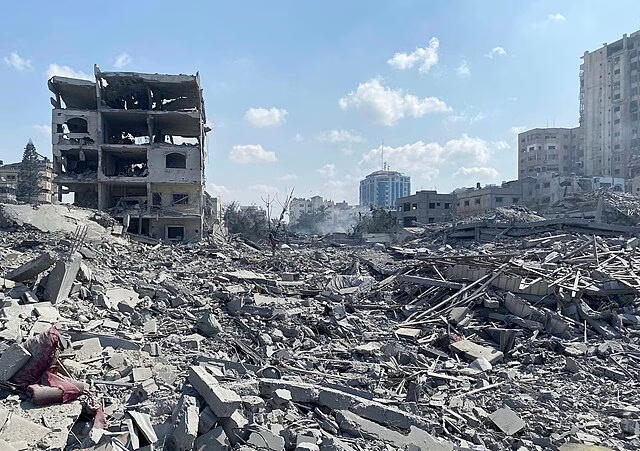
The truth is simple: Gaza has become unlivable, not because of Israel, but because of Hamas. For nearly two decades, Hamas has diverted billions in aid meant for schools, hospitals, and infrastructure into rockets, terror tunnels, and weapons. As a result, ordinary Palestinians are paying the price. Families are grieving, homes are destroyed, and the next generation sees no horizon beyond perpetual conflict.
Voluntary, Not Forcible
Opponents point to international law and the Geneva Conventions, warning against forcible displacement. But the initiative Israel is pursuing is not forced expulsion—it is voluntary migration. Surveys from the Palestinian Center for Policy and Survey Research show that 43% of Gazans would like to emigrate after the war, with many citing safety, opportunity, and hope for their children. For young, educated Palestinians, the figure rises as high as two-thirds.
Should the international community deny them this choice simply because it doesn’t fit the narrative of those invested in perpetuating Palestinian victimhood? If Gazans are asking for a way out, helping them pursue a future in countries willing to host them is not oppression—it’s compassion.
A Global Responsibility
The idea that Gazans must remain locked inside a war zone indefinitely is neither moral nor sustainable. Europe and Arab states who criticize Israel’s outreach should ask themselves: why haven’t they opened their doors? Why is it “inhumane” for Israel to facilitate resettlement, but perfectly acceptable for Jordan, Lebanon, and Egypt to block Palestinian refugees from attaining full rights for generations?
Israel has endured relentless attacks from Hamas, including the October 7th massacre that claimed over 1,200 innocent Israeli lives. No other nation would tolerate an armed terror enclave on its border. Yet, instead of seeking vengeance, Israel is trying to present options that allow those who want to leave to do so—while holding Hamas, not civilians, accountable.
A Chance for a Better Life
Critics deride the idea of Gaza becoming a “Riviera of the Middle East,” as if it is somehow cynical to dream of transforming a war-torn strip of land into a place of prosperity and peace. In reality, the tragedy is that Gaza could already have been that Riviera—if Hamas hadn’t chosen rockets over resorts.
Now, Israel and its allies are seeking a humane alternative. For those Palestinians who wish to leave, relocation could mean safety, education, employment, and dignity. For those who remain, rebuilding Gaza without Hamas might finally become possible.
Conclusion
The international community has a choice: it can continue wringing its hands, condemning Israel for every effort to break the cycle of despair, or it can take part in creative solutions that address the real humanitarian needs of Palestinians.
Voluntary relocation is not a crime—it is an act of mercy. It gives families an escape from endless war and a chance to write a new future. If we truly care about the Palestinian people, we should support Israel’s efforts to give them that choice.