
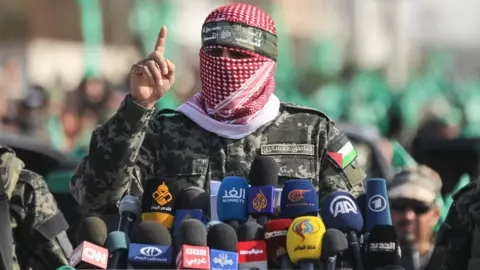
The Israeli Defense Forces (IDF) confirmed Sunday that it had eliminated Abu Obeida, Hamas’ notorious spokesman and chief propagandist, in an airstrike on Gaza City. Obeida was not simply a voice behind a microphone. He was a psychological weapon, orchestrating Hamas’ global incitement campaigns, spreading footage of kidnapped Israelis, and glorifying the atrocities of October 7. His videos did not just inform; they radicalized, encouraging others to replicate Hamas’ terror. In removing him, Israel has struck a blow not only to Hamas’ military wing but also to its machinery of propaganda.
On the same day, the IDF announced the killing of Hazem Awni Naeem, a senior Hamas intelligence officer responsible for the captivity of three young women—Emily Damari, Romi Gonen, and Naama Levy. Their stolen youth and unspeakable suffering symbolize Hamas’ cruelty, and Naeem’s elimination brings a measure of justice, if not closure, to their ordeal.
These targeted operations, deep in Gaza City—one of Hamas’ last strongholds—are part of Israel’s broader effort to dismantle the terror group, free the remaining hostages, and restore security. Tens of thousands of Israeli reservists have now been called up, underscoring the seriousness of the fight and the determination of the Jewish state to finish the job.
Yet, the human toll of this war remains unbearable. Just this weekend, Israel identified the body of 28-year-old Idan Shtivi, murdered at the Nova music festival on October 7. Idan was a student, a young man devoted to sustainability and community, who used his final moments to save others before falling victim to Hamas’ butchery. His courage contrasts starkly with Hamas’ cowardice: abducting women, targeting concertgoers, and hiding behind civilians.
The truth is as simple as it is sobering: this war could end today. Hamas could lay down its arms, release the hostages, and surrender. Instead, it clings to its ideology of destruction, prolonging the suffering of both Israelis and Palestinians. Each day that Hamas refuses surrender is another day of unnecessary bloodshed.
But responsibility does not lie with Hamas alone. Qatar, Turkey, and Iran—its key sponsors and enablers—must be held accountable. The United States, Israel’s closest ally, has the leverage to increase pressure on these regimes. Washington must make clear that there will be diplomatic and economic consequences for those who bankroll or harbor Hamas’ leadership while hostages languish in captivity.
Israel has shown the world what resolve looks like: it will not abandon its citizens, living or dead. Now it is time for the international community—led by the United States—to show that same resolve. Terrorism cannot be negotiated with, it must be defeated. And the hostages must come home.