
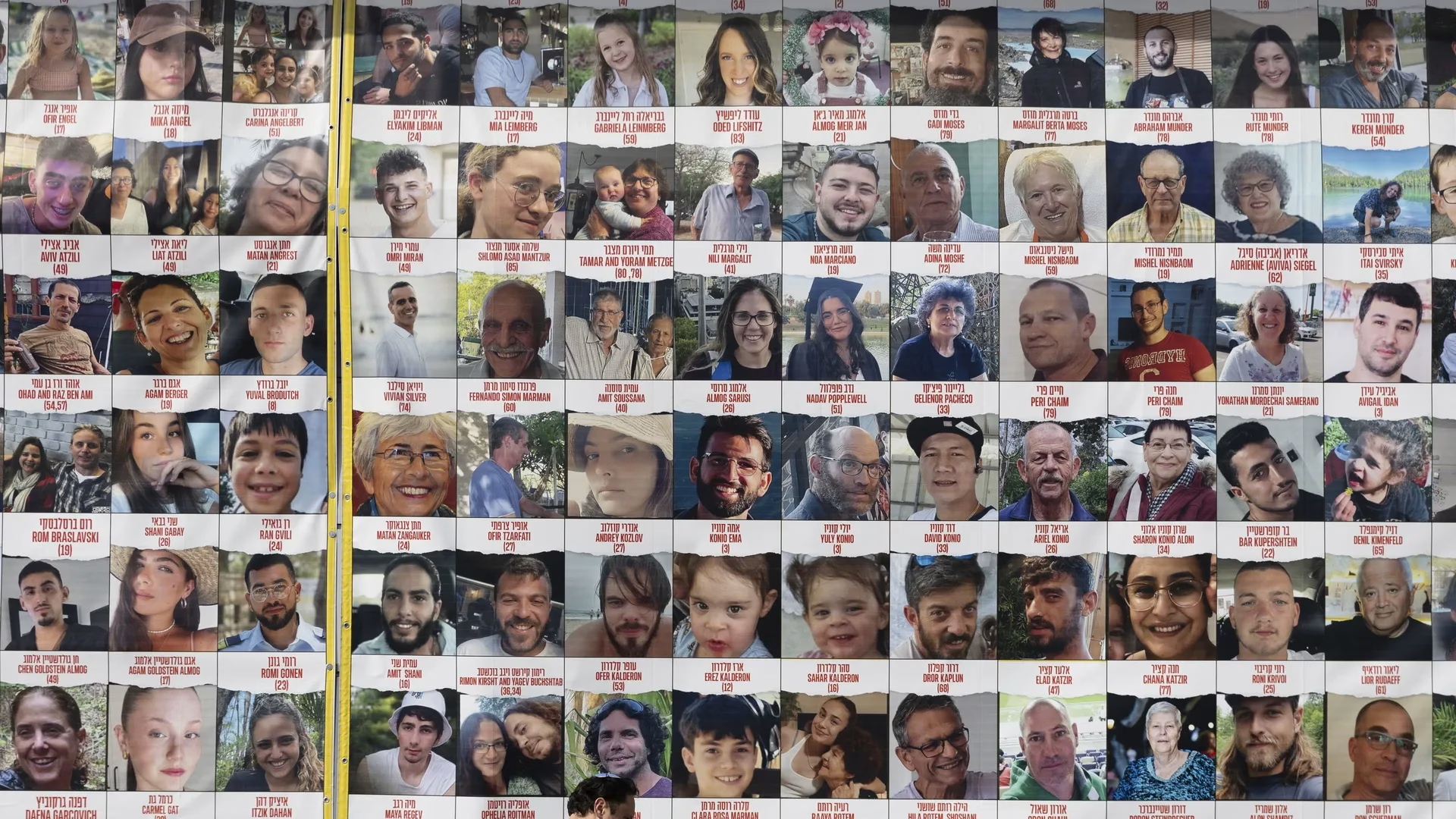
When the first images of the hostages appeared — weary but alive — the nation of Israel exhaled a breath it had been holding for months. Streets fell silent, families wept, and prayers once whispered in anguish rose as songs of thanksgiving. In a land too accustomed to mourning, this moment demanded something else: joy — tempered, sacred, and deeply rooted in faith.
Rabbi Yosef Zvi Rimon, in a message that has spread quickly across synagogues and screens, reminded us that our response to such deliverance is not merely emotional but profoundly spiritual. He teaches that upon seeing or even hearing of the hostages’ release, one may recite the Shehecheyanu blessing — the ancient Jewish expression of gratitude for life and redemption:
“Blessed are You, Lord our God, King of the universe, who has kept us alive, sustained us, and brought us to this moment.”
In that simple phrase lies the heart of the Jewish people — a people who, even after unspeakable trauma, know how to give thanks for the good while praying through the pain.
For Israel, the joy of the hostages’ return exists alongside the agony of knowing that their freedom came at a heavy price: the release of convicted terrorists. It is a moral paradox that tears at the conscience of a nation built on both justice and mercy. Yet the Jewish response, grounded in millennia of spiritual resilience, does not ignore the tension — it sanctifies it. As Rav Rimon notes, we must “give thanks for the good as well as pray in relation to the bad.”
It is this moral clarity — the ability to celebrate life even as we acknowledge the danger still looming — that distinguishes Israel’s soul from the terror that opposes it. Hamas glorifies death; Israel blesses life. Hamas hides behind civilians; Israel mourns every civilian loss, even as it defends its own. The Jewish heart holds grief and gratitude in the same trembling hands.
Rav Rimon’s inclusion of Nishmat Kol Chai — the ancient prayer of praise that exalts God as “the One who frees the captives” — is especially poignant. Those words now resonate not as liturgy alone, but as living testimony. Each hostage walking free is a modern echo of the Exodus, a reminder that divine compassion still moves through history, and that the covenant between God and Israel endures through fire and fear.
But the rabbi’s message also looks forward — to vigilance, unity, and purpose. His call to recite psalms for protection and deliverance acknowledges that while we rejoice, we also remain watchful. Evil has not vanished. The enemies of Israel continue to plot, and the moral courage of this nation will once again be tested in the days ahead.
Still, this moment is sacred. It reminds us why Israel fights and why the Jewish people endure. To see a captive child returned to her mother’s arms is to glimpse, however briefly, a vision of the world as it was meant to be — a world where freedom triumphs over fear, and love overcomes cruelty.
As Jews around the world recite Hallel this Sukkot, they will do so with tears of both relief and remembrance — thanking God for “great miracles, the likes of which we have not witnessed for thousands of years.” The return of each hostage is such a miracle. But it is also a charge to remain strong, to protect life, and to hold fast to the faith that has carried Israel through every exile and every war.
Israel’s enemies may never understand the power of a people who bless even in brokenness, who thank God even in trembling. But that — precisely that — is Israel’s greatest strength.
For when the Jewish people say Shehecheyanu, they are not merely marking a moment in time. They are declaring to the world: We are still here. We still believe. And we will never stop praising the God who frees the captives and restores hope to His people.