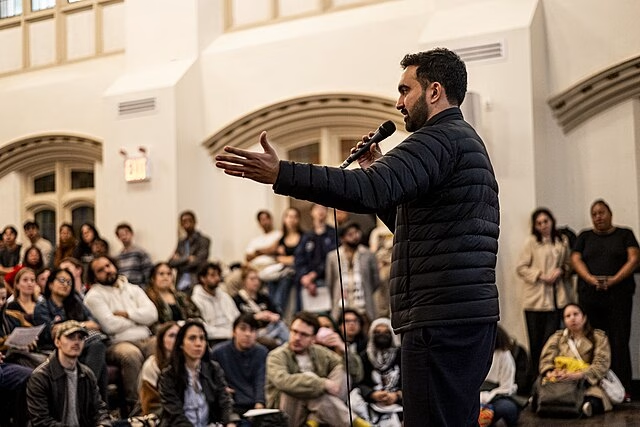
New York City mayoral candidate Zohran Mamdani attempted damage control this week as he faced a skeptical audience of business and civic leaders—many of whom remain deeply concerned about his past rhetoric, including his use of the phrase “globalize the intifada,” a slogan widely seen as inciting violence against Jews.
The meeting, hosted by the influential Partnership for New York City, drew more than 100 of the city’s top executives in finance, real estate, and law. It offered Mamdani an opportunity to clarify his positions and confront the controversy that has followed him since winning the Democratic primary last month. Despite his polished performance, many pro-Israel observers walked away unmoved.
When pressed by Pfizer CEO Albert Bourla—himself the son of Holocaust survivors—about the inflammatory slogan, Mamdani attempted to reframe its meaning. He claimed it referred to global protest against Israeli policy, not violence. But for many in the Jewish community and beyond, the phrase “globalize the intifada” evokes images of suicide bombings, stabbings, and years of deadly terror targeting Israeli civilians.
While Mamdani said he would discourage use of the phrase, he stopped short of renouncing it outright. He made clear he still supports the underlying sentiment—an indication that the candidate’s views remain out of step with those seeking genuine peace and coexistence in the Middle East.
The meeting also revealed broader concerns about Mamdani’s worldview. Questions from executives touched on issues of public safety, property rights, and economic stability. Asked whether he would defund the police, Mamdani pivoted to mental health services. When questioned about shoplifting and crime, he offered few specifics. He acknowledged past social media statements may have been taken out of context, but his pattern of extreme rhetoric remains a red flag for many voters.
Mamdani’s close alignment with radical anti-Israel voices, including Rep. Alexandria Ocasio-Cortez—whom he met with privately in Washington just before the meeting—only deepens the concerns of Jewish New Yorkers and allies of the U.S.-Israel relationship.
Meanwhile, Mamdani’s competitors—incumbent Mayor Eric Adams and former Governor Andrew Cuomo—are intensifying their outreach to the pro-business, pro-Israel community. Adams has drawn praise for his support of New York’s Jewish population and strong stance on antisemitism. Cuomo’s independent run adds another dynamic to a race that is still wide open.
As Mamdani seeks to broaden his appeal beyond his far-left base, he faces an uphill battle convincing mainstream New Yorkers—especially those who view support for Israel and opposition to antisemitism as non-negotiable values.
For now, Mamdani’s performance may have reassured some on style. But when it comes to substance, especially on Israel, he still has a long way to go.