
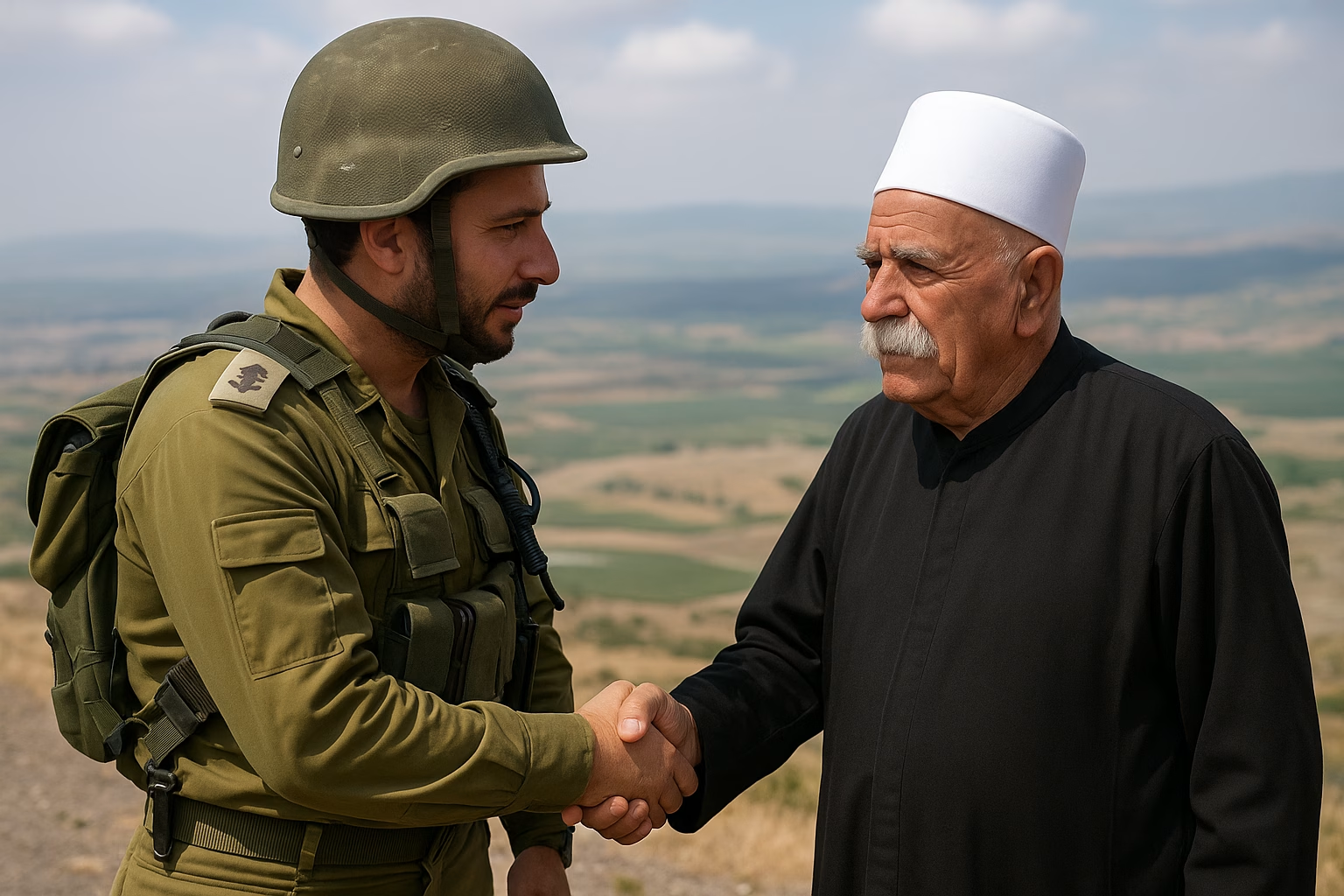
In a world increasingly defined by shifting alliances and broken promises, Israel’s enduring relationship with the Druze community stands out as a powerful example of loyalty, sacrifice, and mutual respect.
Recent developments along Israel’s northern border have drawn international attention. The IDF announced it would take action “to prevent the entrenchment of hostile elements beyond the border, protect Israeli citizens, and prevent harm to Druze civilians.” For many unfamiliar with the region’s complexity, this may raise questions: Why would Israel risk conflict with Syria over a minority group? Why bomb Damascus in response to threats to villages not even within Israeli territory?
The answer lies in a bond that is more than strategic—it is a covenant.
The Druze are a distinct, Arabic-speaking ethnoreligious group with a monotheistic faith that branched from Islam centuries ago. While they share some linguistic and cultural traits with Arab communities, many Druze do not identify as Arab or Muslim. In Israel, they have become an inseparable part of the fabric of national life. Since 1956, the Druze community has willingly accepted mandatory conscription into the IDF, and Druze soldiers have served—and fallen—alongside their Jewish brothers and sisters in defense of the Jewish state.
This partnership is often referred to as a “blood covenant.” It is not merely poetic language. It reflects generations of shared sacrifice and mutual protection.
That covenant was tragically tested again on July 27, 2024, when Hezbollah targeted the Druze village of Majdal Shams in the Golan Heights with a deadly rocket barrage, killing 12 children. The tragedy also highlighted a lesser-known reality: many of the 30,000 Druze residents of the Golan are not Israeli citizens. They retain Syrian citizenship, fearing that Israel might one day relinquish the Golan in a future peace deal. Yet despite this complex identity, the people of Majdal Shams are protected by the Israeli military—not as a diplomatic gesture, but as a moral obligation.
The international community often struggles to grasp these nuances. For those outside Israel, the idea that the Jewish state would risk confrontation with Syria to protect non-Jewish communities might seem puzzling. But to Israelis, and to many Jews and Christians who support Israel, it is a reflection of the very values that define the nation: loyalty to allies, defense of the innocent, and a commitment to moral clarity—even when the world doesn’t understand.
Israel has no illusions about the Assad regime’s nature or the frailty of Syria’s political future. Yet regardless of who governs Damascus or what peace overtures may someday be offered, the Druze people of Syria—many of whom are connected by family and faith to Israeli Druze—remain under threat. As long as they are, Israel must remain committed to their protection.
Supporters of Israel should take this moment to learn more about the Druze community and recognize the profound loyalty they have shown to the Jewish state. We must also advocate for greater equality and opportunity for Israel’s Druze citizens, not only out of gratitude but as a matter of justice.
In a region full of betrayal and instability, the Israel-Druze bond is a rare light. It is a relationship not of convenience, but of covenant. And it deserves our unwavering support.
Let me know if you want to add a title image, Hebrew or Arabic transliterations, or a quote from a Druze leader or Israeli official.