
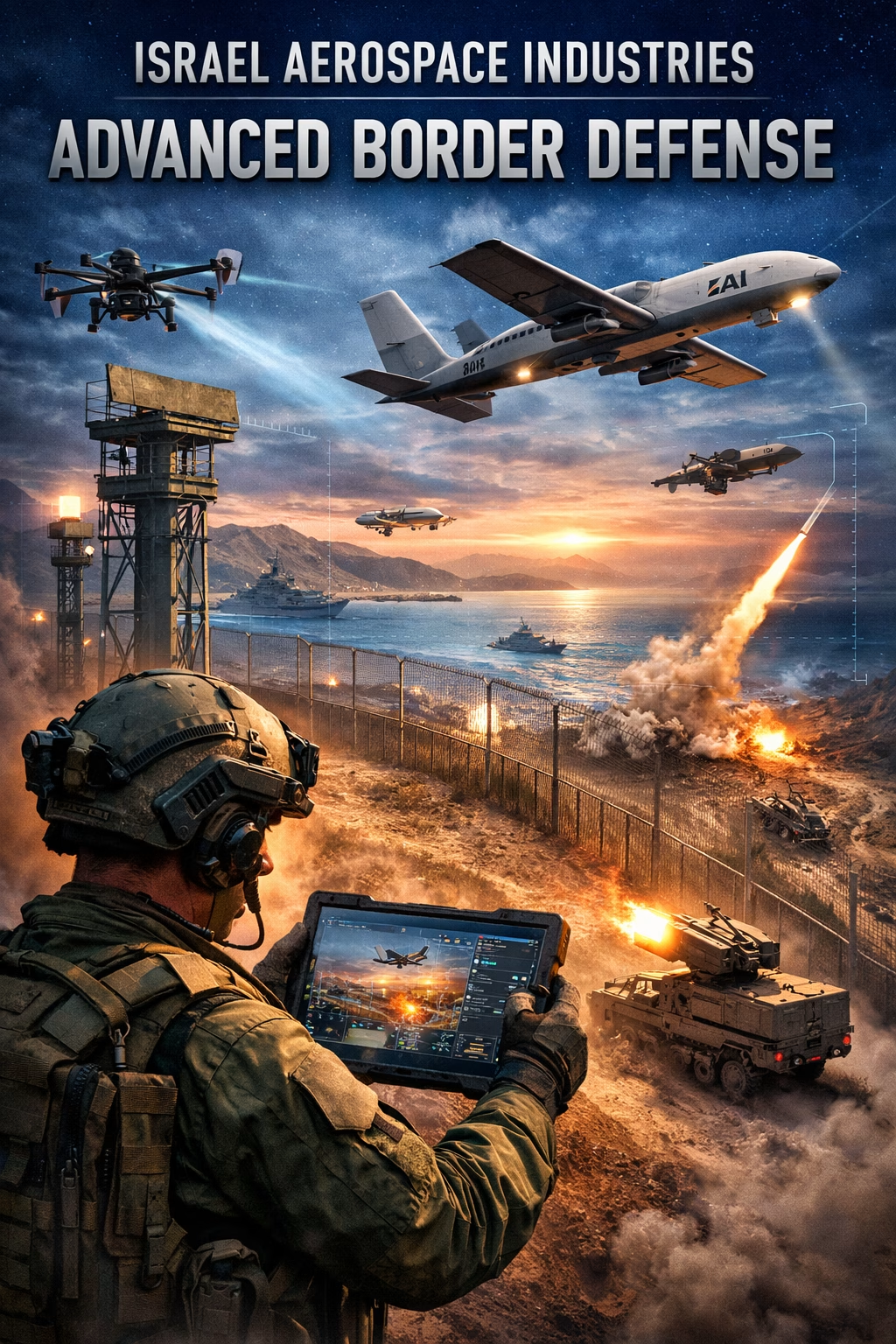
When Israel Aerospace Industries (IAI) unveiled its new AI-driven border protection system this week, it did more than showcase another impressive piece of defense technology. It offered a window into how Israel—small, exposed, and under constant threat—is rethinking the very concept of border security after years of hard lessons.
Israel’s geography has never been forgiving. With narrow borders, no strategic depth, and threats that can emerge simultaneously from land, sea, and air, the margin for error is vanishingly small. The failures of October 7 underscored a painful truth: speed, integration, and decisive action are no longer luxuries. They are necessities. IAI’s new system is designed precisely around that reality.
What distinguishes this platform is not any single drone, radar, or weapon, but the architecture tying them together. By fusing intelligence from multiple sensors into a single, real-time operational picture—and linking that intelligence directly to autonomous and remotely operated strike capabilities—the system radically compresses the timeline from detection to neutralization. In modern conflict, where seconds can separate deterrence from disaster, that compression is everything.
Critics will inevitably bristle at the language of autonomy and AI in warfare, raising ethical and legal concerns about human control. Those concerns deserve serious attention. But it is notable that IAI emphasizes supervised autonomy: systems that operate independently at machine speed, yet remain under human oversight. This is not a vision of war without humans, but of soldiers empowered by machines that reduce exposure, fatigue, and reaction delays.
There is also a strategic message embedded in this unveiling. Israel is signaling—to adversaries and allies alike—that the border is no longer a static line guarded by watchtowers and patrols. It is a dynamic, intelligent battlespace, monitored continuously and defended proactively. For hostile actors who rely on surprise, infiltration, or massed low-tech assaults, that message is meant to be unmistakable.
International interest in the system is unsurprising. Many countries face similar challenges: long borders, limited manpower, and increasingly sophisticated asymmetric threats. Israel’s experience, forged under pressure, often becomes a proving ground for technologies that later shape global security practices.
Ultimately, IAI’s border protection system is not just about hardware or algorithms. It reflects a doctrinal shift—away from reactive defense and toward integrated, anticipatory protection. In a region where threats evolve relentlessly, Israel is making clear that its defenses will evolve faster.