
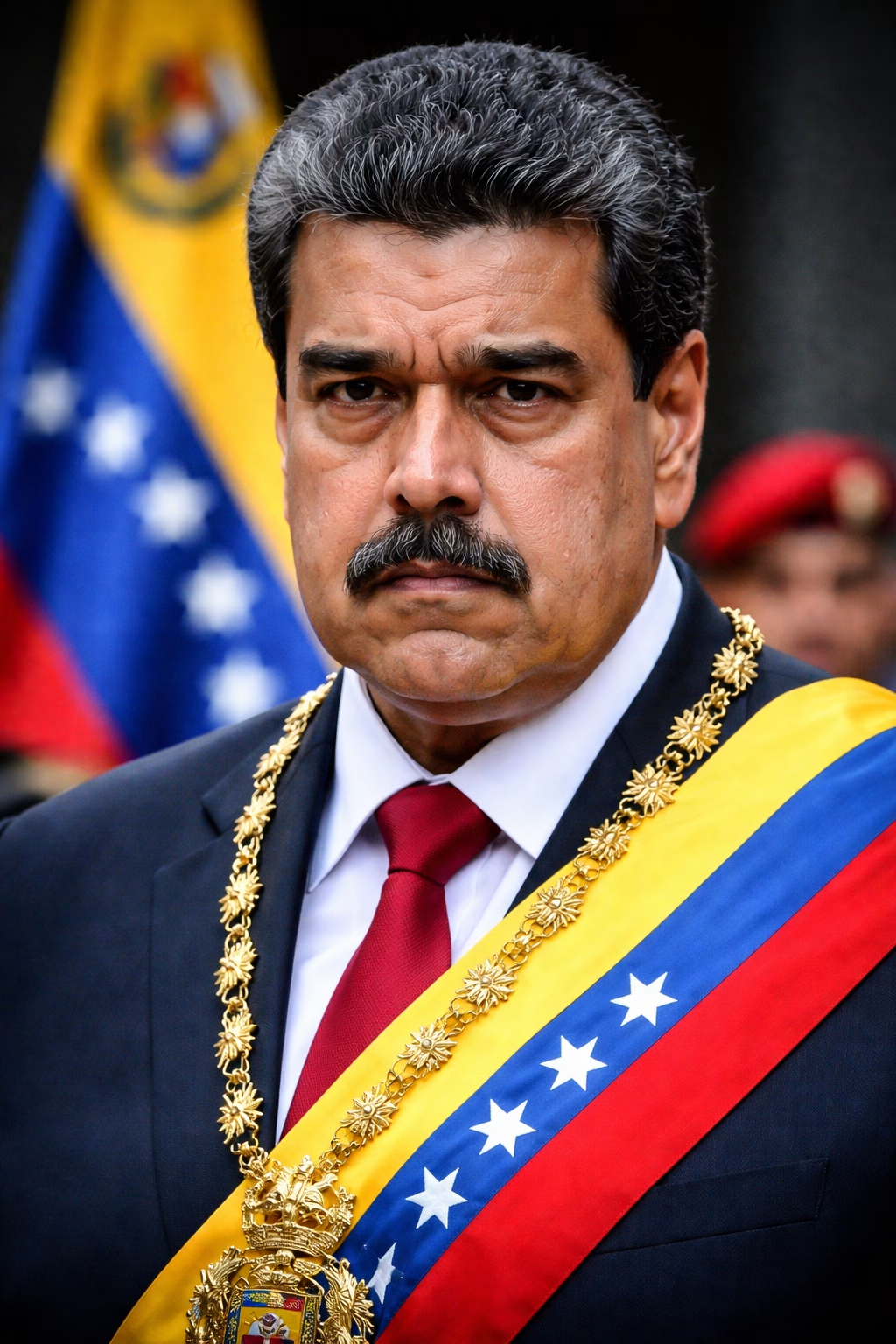
The fall of Nicolás Maduro deserves recognition for what it was: a long-overdue blow against one of the Western Hemisphere’s most abusive regimes. For millions of Venezuelans forced into exile by repression, corruption, and economic ruin, Maduro’s removal marked the end of a 25-year nightmare that began under Hugo Chávez and metastasized into outright tyranny.
But removing a dictator while preserving the system that sustained him is not victory. It is an intermission.
If the Trump administration believes it can seize leverage—whether oil assets or diplomatic concessions—while leaving the core of chavismo intact, it is indulging a dangerous fantasy. A regime without its strongman does not become moderate; it becomes desperate. And desperation, in Venezuela’s case, means repression, paramilitary violence, and conspiratorial appeals to foreign patrons.
Start with the oil illusion. Venezuela’s reserves may be vast on paper, but its energy infrastructure is wrecked. Reviving production would require massive capital investment with uncertain returns in a world already flush with supply. More importantly, Venezuela’s tragedy has been its addiction to oil rents. The country will not be rebuilt by doubling down on the very resource curse that empowered authoritarianism in the first place.
Then there is the political reality. Maduro’s inner circle wasted no time signaling defiance. Claims that his capture carried “Zionist undertones” and calls to mobilize armed colectivos are not bargaining positions; they are warnings. Figures like Diosdado Cabello are not transitional partners. They are regime enforcers whose survival depends on chaos, not compromise.
This makes half-measures untenable. It is politically incoherent to depose Maduro while leaving behind another Maduro in all but name. Doing so would betray the Venezuelans now cheering his downfall and squander bipartisan American support for decisive action against a criminal regime. Conservatives understand regime change when it is real; liberals understand the moral obligation to support democratic restoration. Neither will accept cosmetic change.
The path forward is difficult but clear.
Venezuela is not Iraq. It already has a democratically elected president in Edmundo González, who won a decisive mandate in 2024 and was recognized as legitimate by the United States. The problem is not the absence of an alternative; it is the persistence of armed spoilers.
Those spoilers must be given choices. For top-level hard-liners, the choice is exile or prosecution—Club Med or Club Fed. For pliable regime figures, the choice is political normalization through free and fair elections or permanent exclusion from public life. For military and paramilitary leaders, the offer should be conditional amnesty in exchange for loyalty to a democratic transition—or the certainty of indictment and extradition.
None of this works without a timetable. If elections cannot be held in weeks, then they must be guaranteed within months. A credible road map—public, binding, and internationally monitored—is not optional. Legitimacy requires clarity.
Critics argue that capturing Maduro sets a precedent for great-power lawlessness. That comparison collapses under scrutiny. There is a categorical moral difference between apprehending an indicted dictator responsible for mass suffering and attempting to overthrow sovereign, elected governments. International law cannot be allowed to become a sanctuary for despots.
Maduro’s fall was greeted with joy because it ended decades of cruelty that much of the world preferred to ignore. Donald Trump now faces a test larger than the operation that removed him. He can either complete the transition to a legitimate, democratic government—or squander a rare moment when power and principle briefly aligned.
The difference between those outcomes is an election: free, fair, and fairly soon.