
Forwarded this email? Subscribe here for more.
Feb 9


I don’t have many photos from my early college years — probably because most of that time was spent indoors, clutching a laptop like a talisman, and shouting “decolonize!” into the void of the internet. Or maybe because deep down, some part of me sensed that one day I’d be embarrassed by the entire spectacle.
When I was about fourteen, I discovered anti-Zionism.
Not Jewish history.
Not the complexity of the Middle East.
Not the existence of, you know, actual Israelis.
No — I discovered the ideology.
Always a voracious consumer of online outrage, I devoured every thread, infographic, and flame-war I could find — eagerly inhaling the digital fumes of self-righteous activists who insisted that Israel was the root of all geopolitical evil.
Little did I know, as a young teenager armed with zero historical context but maximum confidence, I had tumbled headfirst into the rabbit hole of the social-justice orthodoxy — that perverse wonderland where buzzwords are proof, slogans are scholarship, and the lived experience of millions of Jews is dismissed with a flip of the wrist.
Looking back now, it’s almost funny.
Almost.
Back then, anti-Zionism felt like a belief system — a comforting religion for people who didn’t want actual theology but still wanted something sacred to yell about.
It taught me that any opinion that deviated from my newfound doctrine was “violence.”
Disagreement? Oppression.
Nuance? A Zionist trap.
Jewish self-determination? Colonialism, obviously — because who needs history when you have hashtags?
And if someone dared express a perspective I didn’t like?
Easy.
Protest them.
Disinvite them.
Drown them out.
Shut down their event before they even open their mouths.
Because nothing says “justice” like preventing other people from speaking.
If a lecture felt uncomfortable? Demand a trigger warning.
If facts contradicted my narrative? Report the speaker.
If a Jewish student talked openly about their family in Israel? Call the bias hotline immediately — after all, personal stories are propaganda.
And heaven forbid someone point out that Jews might have… indigenous ties to Israel.
That was blasphemy of the highest order.
Looking back, I openly embraced an ideology that believed wrongthink deserved the same consequences as physical violence.
We said words were violence — but apparently, only certain words.
Chants calling for a country’s destruction?
Those were “just feelings.”
No big deal.
And now?
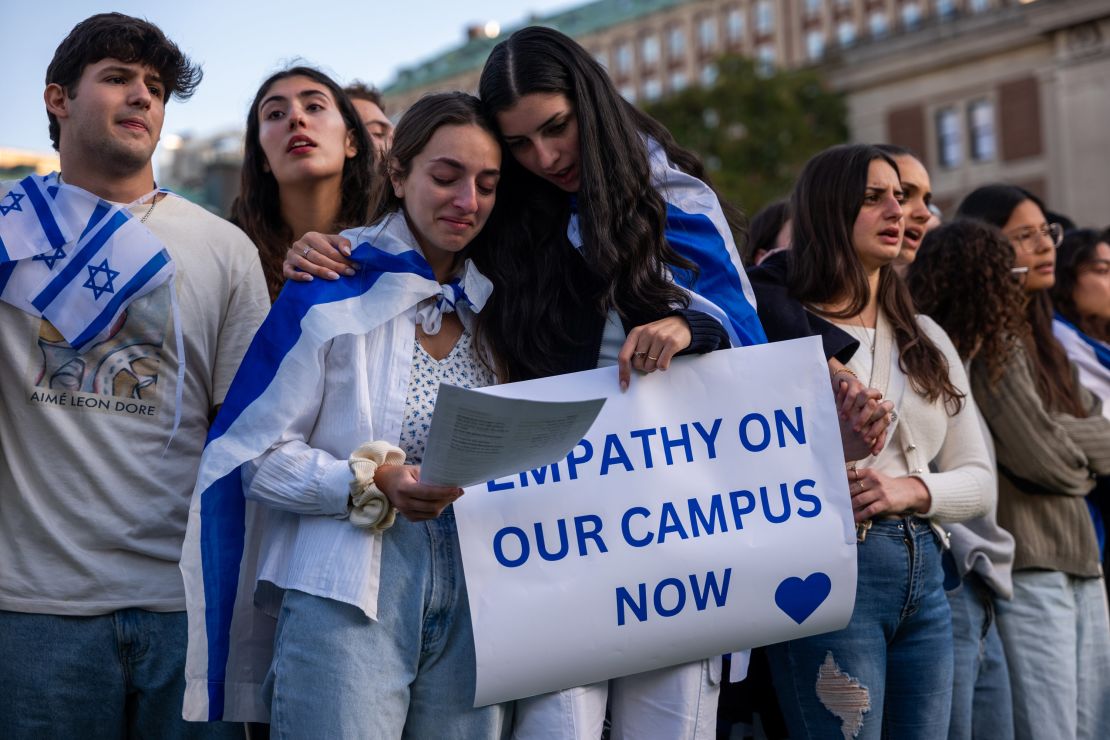
Now I watch activists who sound exactly like my former self — screaming on campuses, tearing down posters of kidnapped Israelis, insisting Hamas is “complicated,” and shouting down any speaker with a Jewish last name — and I’m forced to confront the uncomfortable truth:
This is the logical conclusion of the ideology I once bowed to.
A worldview that erases Jewish identity.
A movement that romanticizes terrorists.
A narrative that treats Zionism — the most natural expression of Jewish survival — as a crime.
I used to believe all of that.
Until I learned history.
Until I met Israelis who weren’t caricatures.
Until I realized that the Jewish people aren’t some branch office of “whiteness,” but one of the world’s oldest, most resilient indigenous communities.
Until I understood that Zionism isn’t colonialism — it’s homecoming.
And once you see that?
You can’t unsee it.
So here I am:
A recovering anti-Zionist.
A person who traded slogans for scholarship.
A former campus moral revolutionary who finally realized that nuance isn’t betrayal, and that Jewish self-determination is not only legitimate — it’s just.
Do I feel embarrassed by my past?
Absolutely.
But I’m also grateful.
Because the journey out of ideological darkness has made the truth shine brighter.
And the truth is simple:
Israel isn’t the villain.
Israel is the miracle.