
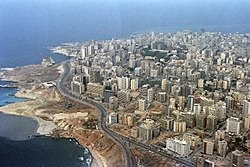
More than a year after a cease-fire formally ended the deadliest confrontation in decades between Hezbollah and Israel Defense Forces, Beirut still lives under a sound.
It is not the roar of fighter jets or the thunder of artillery. It is smaller, thinner, more intimate. A metallic whine that hovers at the edge of hearing — constant enough to unsettle, faint enough to deny.
The drone.
In theory, the war ended. In practice, it lingers overhead.
According to United Nations peacekeepers, thousands of aerial violations have been recorded since the truce took effect. Lebanese officials report hundreds killed in airstrikes since the cease-fire. Israel maintains it is targeting Hezbollah operatives and weapons infrastructure, arguing that the group has continued to rebuild military capacity in violation of the agreement.
Strategically, Israel sees necessity.
Psychologically, Beirut experiences occupation of the sky.
The Soundtrack of Suspended Peace

In neighborhoods across the Lebanese capital, daily life unfolds in uneasy coexistence with that sound.
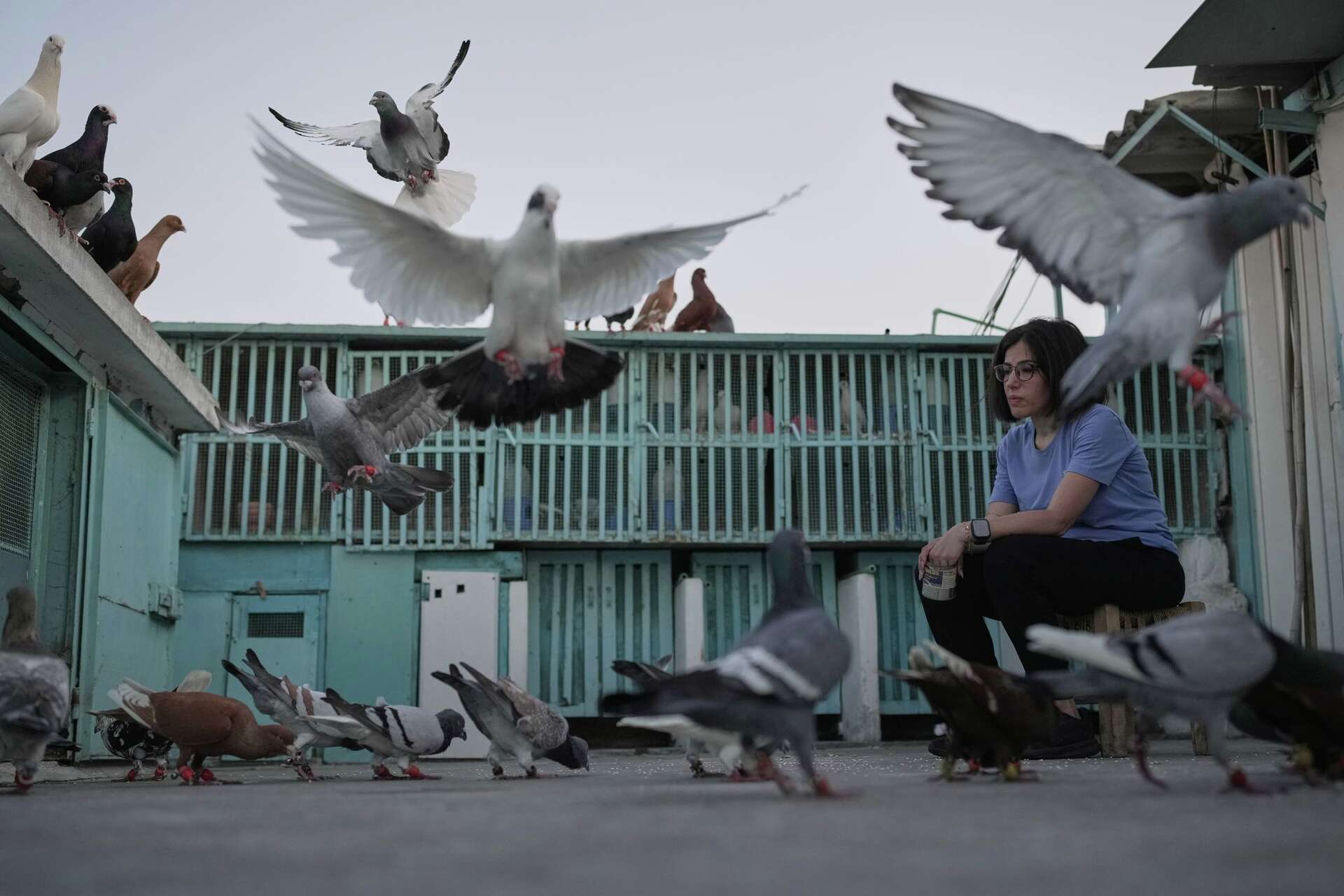
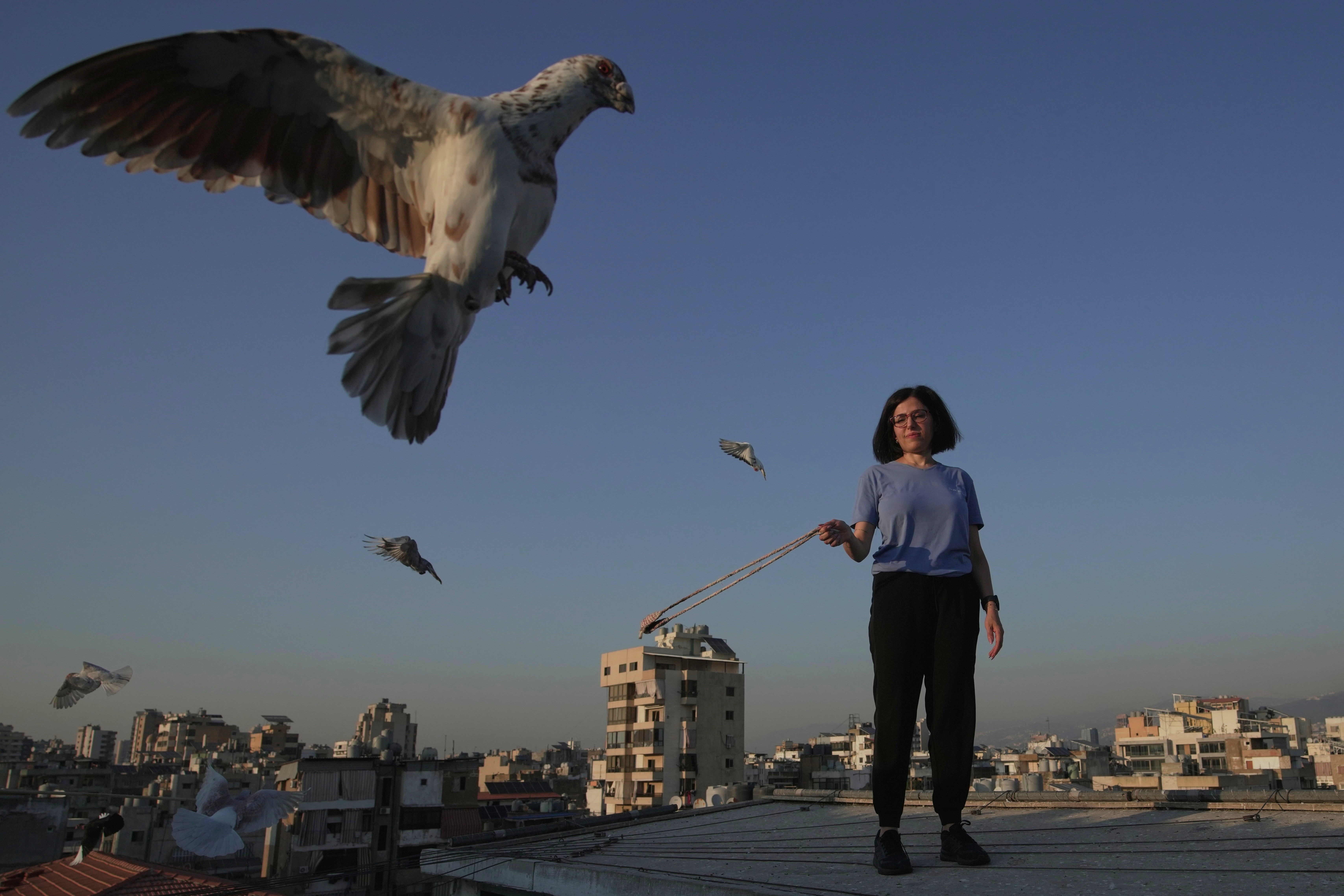
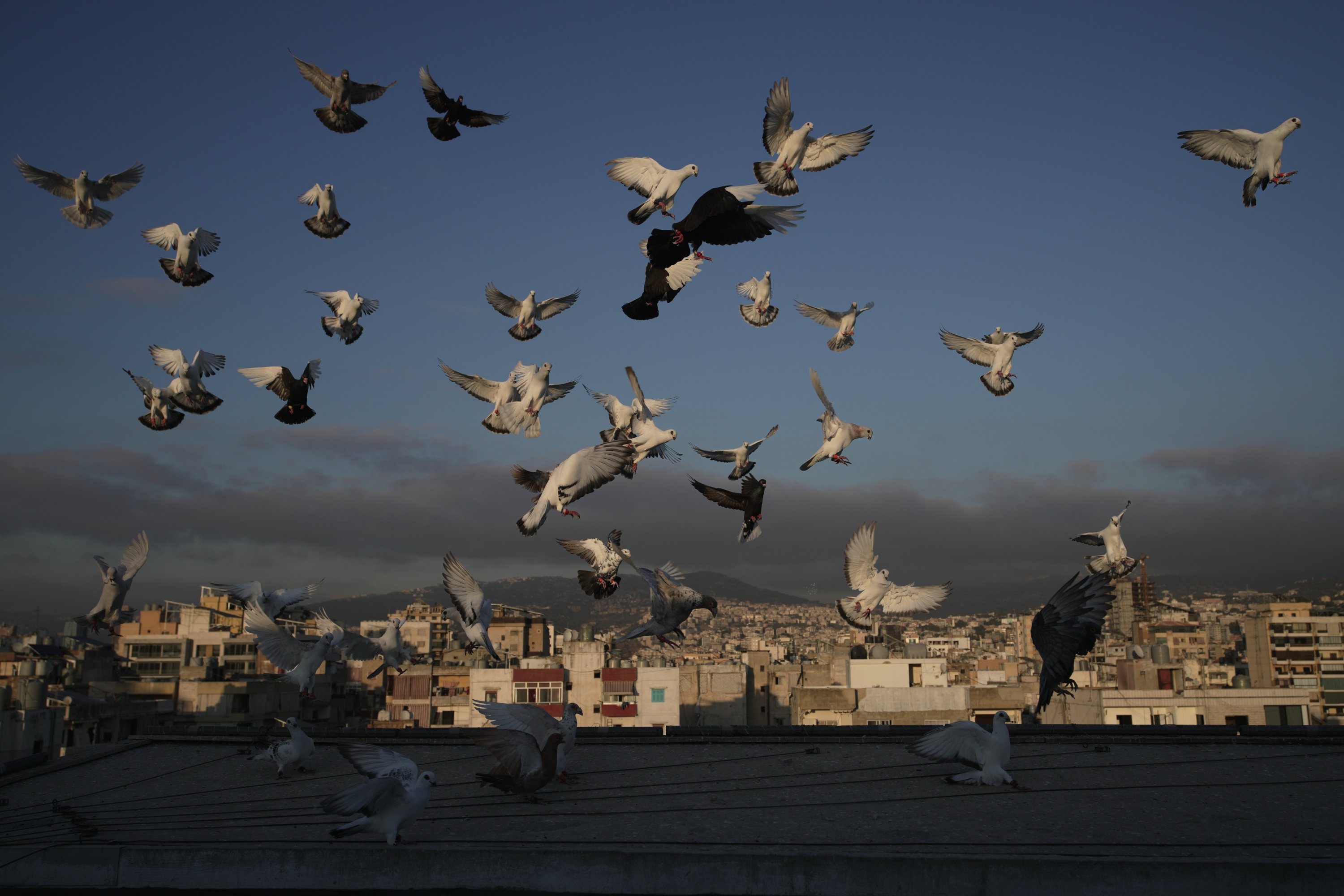
Pigeon keepers practicing the centuries-old Levantine rooftop game of kash hamam now release their birds into airspace shared with surveillance aircraft. Delivery drivers report GPS interference when drones hover low. Store owners find themselves unable to focus. Parents glance upward involuntarily.
Children know the sound by name.
The drone has acquired a nickname — “Umm Kamel,” a sardonic play on an Israeli model designation. Social media jokes about it. Memes circulate. Humor, as ever in Lebanon, is a coping mechanism. But jokes do not lower cortisol levels. They do not quiet nervous systems.
A cease-fire that does not restore psychological safety is not peace. It is intermission.
Surveillance as Atmosphere
Modern warfare has blurred the line between battlefield and living room. Surveillance, once a tactical tool, now operates as an ambient condition.
Drones over Beirut are used primarily for intelligence gathering. Many are also armed. They may circle for hours without incident — until they do not.
This uncertainty is the core injury.
The Lebanese public is not reacting to constant explosions; it is reacting to constant possibility. The body cannot habituate to indefinite threat. A population cannot fully rebuild while it remains watched by a machine capable of instantaneous lethality.
This is not merely a Lebanese problem. It is the broader evolution of twenty-first century conflict. Precision warfare promises reduced collateral damage. But the precision of the strike does not neutralize the imprecision of fear.
Israel’s Security Imperative — and Its Limits
To understand this moment honestly requires acknowledging Israel’s security doctrine.
Following the October 7 massacre and subsequent regional escalations, Israel adopted a posture of forward deterrence. From its perspective, allowing Hezbollah to reconstitute military infrastructure along its northern border presents an existential threat. Intelligence dominance and persistent aerial presence are tools to prevent surprise attacks and weapons entrenchment.
Within that logic, drones are not harassment — they are preemption.
But security policy is not evaluated solely by tactical success. It must also be measured by its strategic consequences.
What does prolonged surveillance over a civilian capital achieve politically? Does it deter Hezbollah leadership, or does it entrench anti-Israel sentiment among ordinary Lebanese who are neither militants nor decision-makers? Does it prevent war, or normalize a low-grade state of permanent hostility that makes future escalation more likely?
Deterrence that erodes legitimacy carries long-term costs.
The Children Are Listening



Perhaps the most telling arena is not military, but developmental.
Therapists in Beirut report that children interrupt counseling sessions to run to windows when the drone passes. They draw helicopters and aircraft in crayon. They can identify the sound instantly.
Chronic hypervigilance imprints differently on young nervous systems. A population that grows up under the persistent hum of surveillance does not merely “adapt.” It internalizes instability as normal.
The oft-repeated phrase that “Lebanese are resilient” deserves scrutiny. Resilience is not the absence of trauma; it is adaptation to it. The question is not whether Beirut can endure — it has endured civil war, occupation, economic collapse, and the catastrophic port explosion. The question is what endurance costs.
A society permanently braced for impact cannot fully flourish.
Art as Defiance
Not all responses are silent.
Some artists in Beirut have sampled drone recordings and transformed them into music — repurposing the mechanical whir into rhythm and melody. It is a small act of agency in a situation defined by power asymmetry.
This creative inversion underscores a truth: when control of the sky is unattainable, control of meaning becomes the next battlefield.
But art cannot substitute for policy.
What Peace Actually Requires
Peace is not simply the absence of rockets. It is the restoration of predictability.
If Hezbollah is indeed rebuilding, that is a violation that demands international enforcement. If Israel believes security guarantees are insufficient, that signals a failure of diplomatic architecture. The answer, however, cannot be indefinite psychological warfare over a civilian population.
The current reality satisfies neither side’s long-term objectives:
- Hezbollah retains its narrative of resistance.
- Israel maintains tactical reach but accumulates reputational strain.
- Lebanese civilians absorb the ambient cost.
True de-escalation would require verifiable disarmament mechanisms, credible monitoring, and mutually recognized red lines — not perpetual hovering.
The War That Never Quite Ended
In Beirut, couples still dine along the Mediterranean. Pigeons still circle rooftops. Motorbikes weave through traffic. Life insists on itself.
But above it all, the whir continues.
A cease-fire that leaves an entire city listening for missiles is not closure. It is suspension — a war paused but not resolved, outsourced to a machine that watches, waits, and occasionally strikes.
If the region hopes to break its cycle of recurrence, it must aim higher than quiet skies punctuated by surveillance. It must pursue a peace that is audible — not because of drones overhead, but because of their absence.
Until then, Beirut will keep looking up.