


By Alex Grobman
February 28, 2026
The Middle East was plunged into its most volatile crisis in decades on Saturday after United States and Israel launched sweeping, coordinated strikes on Iran, targeting military infrastructure and the residence and compound of the Supreme Leader — an operation that President Donald Trump said is intended to trigger regime change in Tehran.
The strikes, described by the Israel Defense Forces as the “largest aerial operation in the nation’s history,” provoked an unprecedented wave of Iranian retaliation across the region, sending drones and missiles toward American bases, Israeli territory, and Gulf states, while disrupting global oil flows and igniting widespread international alarm.
A Coordinated U.S.–Israel Offensive
According to U.S. Central Command (CENTCOM), “Operation Epic Fury” began at 1:15 a.m. ET, featuring simultaneous strikes from air, land, and sea platforms. American forces used one-way attack drones in combat for the first time, deploying models reverse-engineered from Iranian Shahed-class drones.
Targets included:
- Islamic Revolutionary Guard Corps (IRGC) command sites
- Air-defense and radar installations
- Drone and missile launch facilities
- Strategic airfields
Israel launched hundreds of munitions against 500 targets, using approximately 200 fighter aircraft in what officials called the largest coordinated flyover ever conducted by the Israeli Air Force.
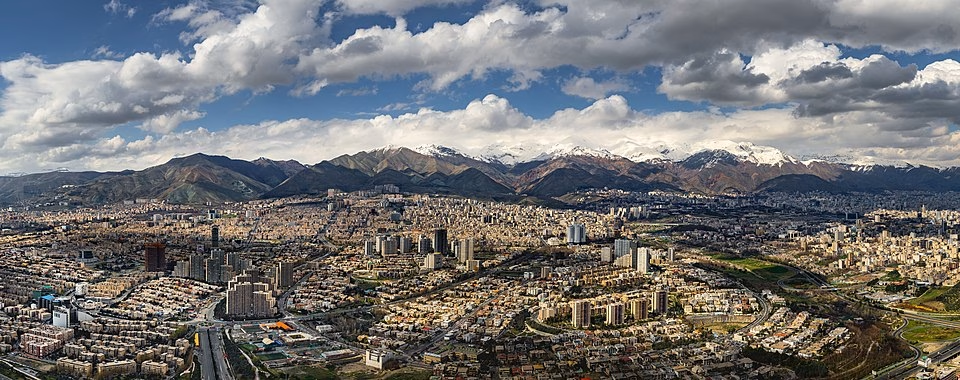
In Tehran, massive explosions lit the skyline, striking sites close to the offices of Iran’s Supreme Leader and senior military figures.
Iranian media reported at least 201 deaths and 747 injuries across 24 provinces, including dozens of students killed in a strike on a girls’ school — a claim U.S. officials have not yet addressed.
Iran’s Unprecedented Regional Retaliation

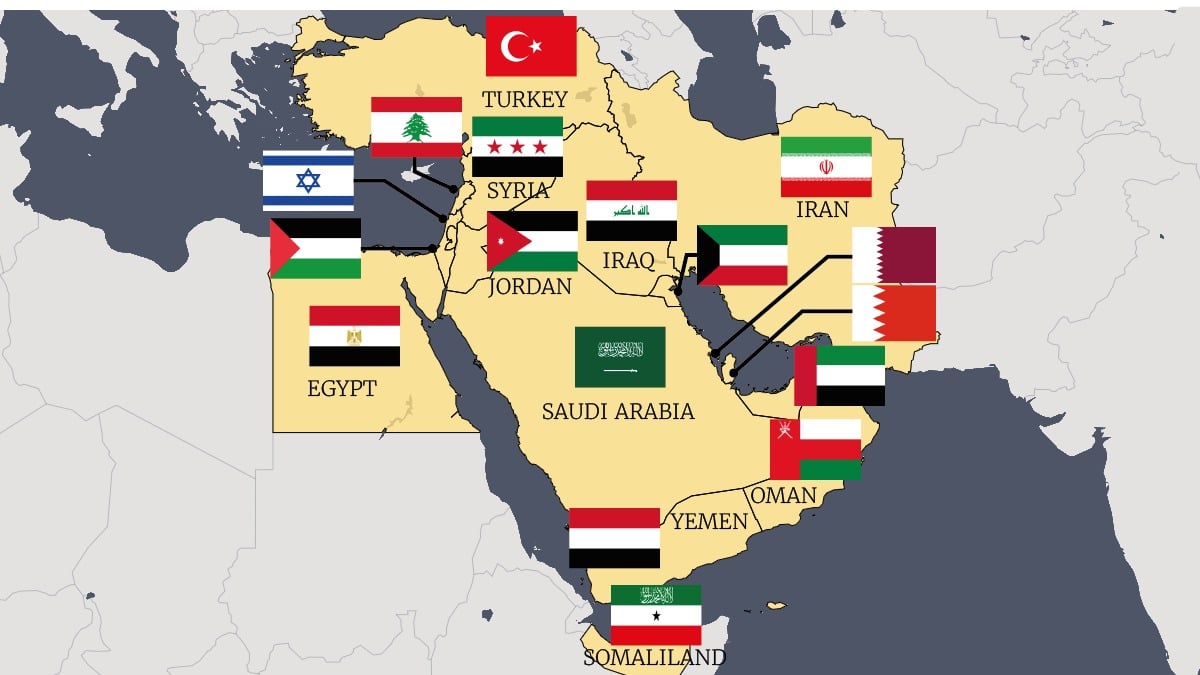
Within hours, Iran unleashed the largest retaliatory strike in its history, hitting targets across the Middle East:
Targets Hit by Iran
- U.S. Al-Udeid Air Base (Qatar)
- Al-Salem Air Base (Kuwait)
- Al-Dhafra Air Base (UAE)
- U.S. 5th Fleet Naval HQ in Manama, Bahrain
- Sites in Israel
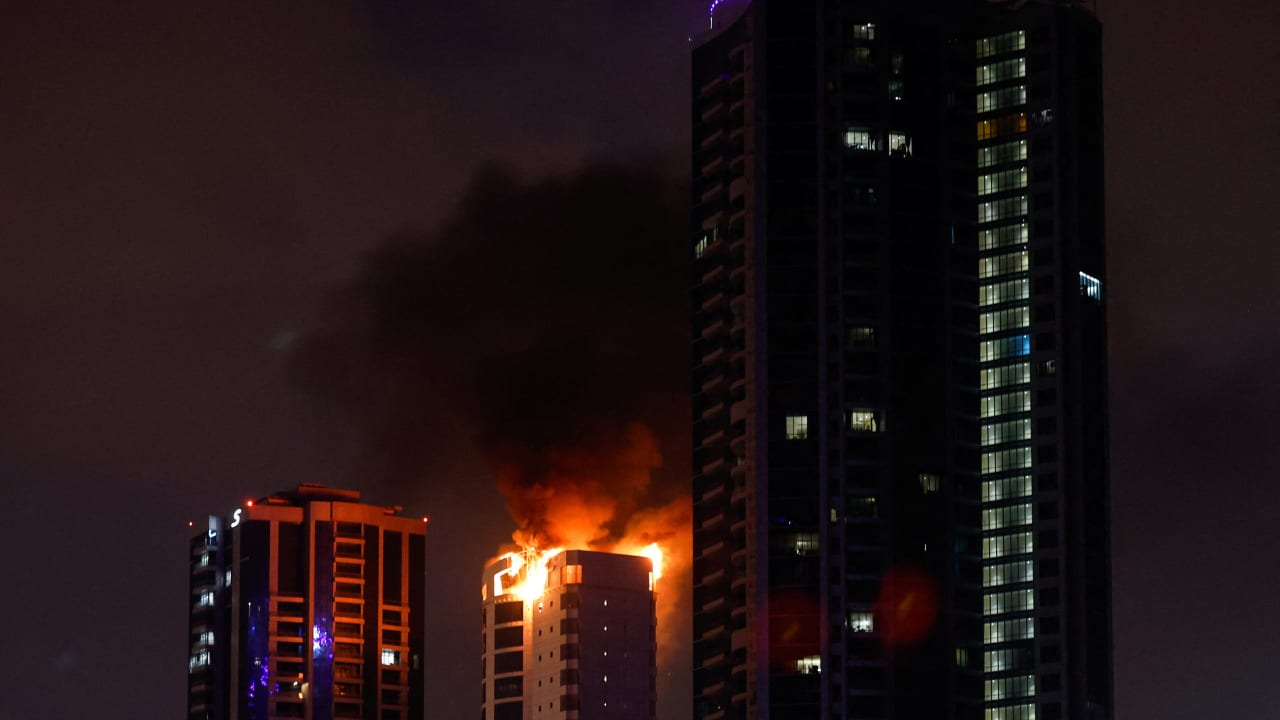
- A densely populated neighborhood in Dubai, struck by an Iranian drone
Video verified by CNN shows Iranian Shahed drones hitting a residential high-rise in Bahrain and destroying a radar dome near the U.S. Navy base.
Iran’s Khatam al-Anbiya military command declared the country “prepared for a long war,” promising more powerful strikes in the coming days.
Oil Markets and Global Shipping Reel
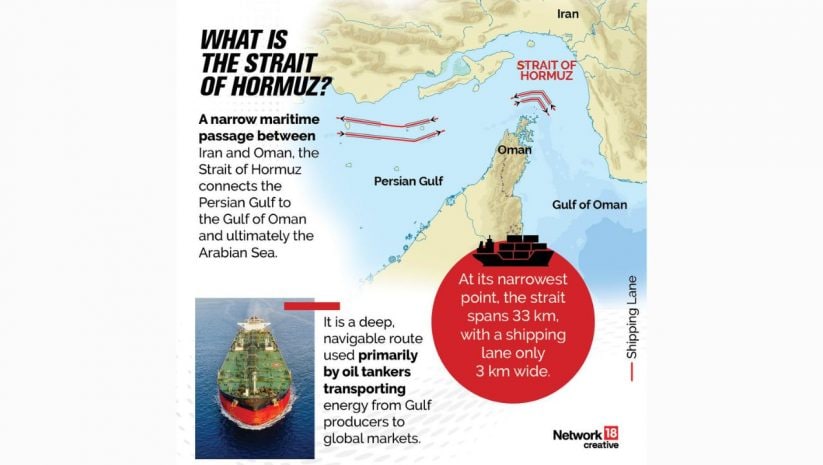
The Strait of Hormuz, through which a fifth of global oil passes, descended into chaos as:
- 20–25% of ships reversed course or stalled
- Four Very Large Crude Carriers (VLCCs) carrying 8 million barrels of oil turned back
- Multiple vessels reported the strait was “closed,” though the UK Maritime Trade Operations office could not confirm
The U.S. Department of Transportation urged all commercial vessels to avoid the Gulf “if possible.”
A prolonged closure of Hormuz would constitute the most severe oil-supply shock since the 1979 Iranian Revolution.
Major Cities Worldwide Boost Security
Given warnings of possible retaliatory terror operations, security agencies across multiple countries moved to high alert.
Inside the U.S.:
- FBI Director Kash Patel ordered counterterrorism teams to “mobilize all assets”
- The U.S. Secret Service increased protective measures around federal sites
- New York City Mayor Zohran Mamdani, himself critical of the strike, boosted NYPD patrols at “sensitive locations”
Internationally:
- Russia and Qatar called for immediate cessation of hostilities
- Arab states expressed concern for “regionwide destabilization”
- Europe urged restraint amid fears of mass displacement and humanitarian fallout
Political Reverberations in Washington
The strikes have triggered a political earthquake inside the United States.
Democratic figures seen as potential 2028 presidential candidates condemned the operation:
- Gavin Newsom warned of an “illegal, dangerous war”
- Pete Buttigieg said the strikes “do nothing for Americans’ daily needs”
- Andy Beshear invoked the “long-term costs” of Iraq and Afghanistan
- JB Pritzker criticized Trump for lacking authorization and clarity
Even within the MAGA political base, typically loyal to the President, there is visible unease, with analysts noting the potential for an extended war to fracture Trump’s coalition.
Inside the Situation Room
Vice President JD Vance and senior Cabinet officials monitored the strikes from Washington, while Trump remained in direct oversight from Mar-a-Lago.
Hours earlier, Trump had been seen swaying to “God Bless the U.S.A.” at a fundraiser — video that immediately went viral, underscoring the surreal juxtaposition of wartime decision-making and campaign-season imagery.
A Region on the Brink
Experts warn the situation may escalate into a multi-theater conflict:
- Iran claims its core missile and air-defense capabilities remain intact
- Tehran may call upon Hezbollah, Iraqi militias, Yemeni Houthis, and Syrian proxies
- Israel, having struck Iran’s interior directly, faces the possibility of sustained ballistic and drone fire over days or weeks
- U.S. bases from Bahrain to Djibouti are bracing for additional waves
The conflict already dwarfs the scale of the 2024 Israel–Iran 12-day war, and diplomats fear it could reshape the regional order for a generation.
The Stakes

The United States and Israel say the goal is decisive: to dismantle Iran’s regime and eliminate its nuclear ambitions.
Iran says it will fight “until the aggressor is punished.”
Oil markets are rattled. Global powers are scrambling. Civilians across the Middle East are sheltering from missile fire. And the world is now watching the dangerous opening hours of what could become the most consequential conflict of the 21st century.