
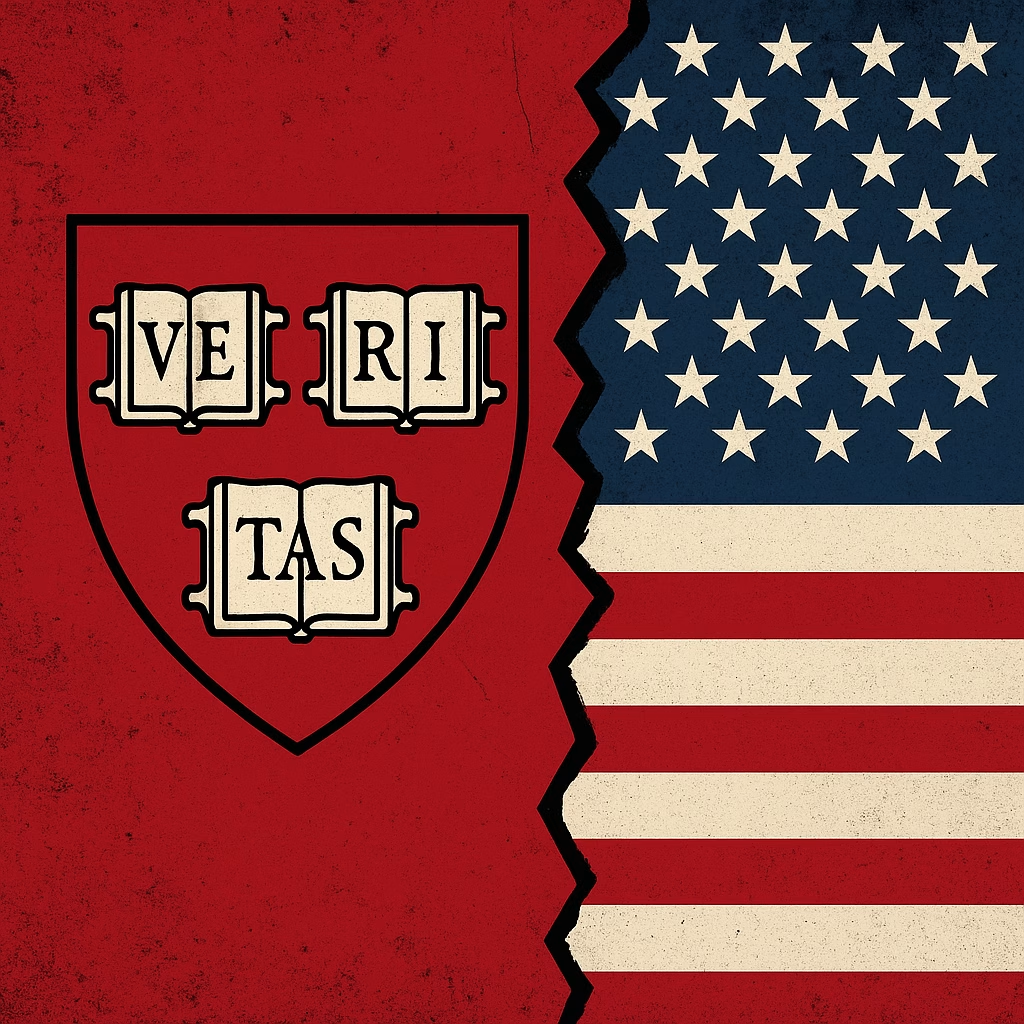
The president’s fight threatens to leave the school a different place even if it ultimately wins its lawsuits
As President Trump escalated his attacks against Harvard University, its board resolved to fight.
Trustees discussed whether to sue or pursue deal talks after Trump first targeted the university in March. But as the president lobbed bomb after bomb at the school—pulling billions in federal funds, threatening its tax-exempt status, and now trying to block it from enrolling international students—the group stood firm.
By Friday, the school had filed two lawsuits against the administration, the latest to regain its foreign students.
Trump on Friday showed no signs of softening. “Harvard’s going to have to change its ways,” he said in the Oval Office.
Even as Harvard looks to the courts for relief, faculty and administrators back on campus are making contingency plans and preparing for a drawn-out war—one that threatens to leave Harvard a different place even if the school ultimately wins the lawsuits.
Harvard is already contending with the damage the Trump administration has inflicted, and the government has many levers at its disposal to strain the university’s finances while the legal fights drag on.
“These federal actions have set in motion changes that will not be undone, at least not in the foreseeable future,” Hopi Hoekstra, the dean of Harvard’s faculty of arts and sciences, said in a recent faculty meeting.
Funding is unlikely to return to its full level even if Harvard wins a lawsuit it has filed against the federal government seeking to restore billions in federal funds, Hoekstra said. Special committees are analyzing staffing and looking for ways to keep research going. Harvard’s school of public health has conducted layoffs, reduced graduate-student admissions and cut back on everyday expenses like printing and catering.
To backfill some of the billions in lost research funds, the school is contributing an additional $250 million “for a transitional period as we continue to work with our researchers to identify alternative funding sources,” said Harvard President Alan Garber, who himself is taking a 25% pay cut.
Harvard’s conundrum is that it cannot trust the Trump administration to negotiate in good faith nor can it count on winning an extended battle with the federal government, says Aziz Z. Huq, a law professor at the University of Chicago.
The result, Huq suggests, will be a reset not only for Harvard but across higher education. The current model for research universities was created during World War II, when the military outsourced its research and development to schools. That model served the nation well for decades but is increasingly under attack from MAGA conservatives who believe that higher education has become a hotbed of liberal ideology that needs to be torn down and rebuilt.
Under the Trump administration, the federal government is deploying an unprecedented range of tactics. The government has said it is targeting antisemitism that flared across campuses in the wake of pro-Palestinian protests that erupted after the Gaza war began; the White House says that Harvard and others failed to adequately protect Jewish students. It is also targeting diversity, equity and inclusion efforts, which it views as discriminatory.
The administration’s latest move is the effort to bar Harvard from enrolling international students, by revoking the school’s certification in the government program that allows noncitizens to study in the U.S. under student visas.
That decision started with a letter that arrived at Harvard’s international office on April 16 from the federal government. It was like nothing university officials had seen in over 70 years of hosting foreign students, Harvard said in a court filing.
In it, Homeland Security Secretary Kristi Noem said enrolling foreign students is a privilege, not a guarantee. The university was at risk of losing that privilege, she said, because it had created a hostile learning environment for Jewish students.
She requested Harvard send eight detailed pieces of information on all its students on visas. Among them: any examples of “known deprivation of rights of other classmates or university personnel” by visa holders, and whether any had left Harvard “due to dangerous or violent activity.” Noem asked about threats and illegal activity made by students and whether foreign students had ever obstructed the school’s learning environment.
Harvard had 10 business days to come up with the information, Noem said, or the government would revoke the university’s ability to enroll international students.
On the day of the deadline, Harvard sent DHS thousands of pages of documents, including enrollment records and any visa cancellations from its foreign students.
That same day, April 30, Trump said at a public cabinet meeting that Harvard didn’t deserve federal grant money, claiming that “the students they have, the professors they have, the attitude they have, is not American.”
Pressure was building on Harvard on other fronts. Trump said on social media that the university’s tax-exempt status would be taken away. Education Secretary Linda McMahon sent Harvard a letter on May 5 telling it not to bother applying for federal grants in the future, because none would be provided.
On May 7, a Homeland Security lawyer told Harvard the information it provided on visa holders wasn’t enough. The lawyer reiterated four of the original eight categories of information DHS had requested, including any known illegal activity, threats to other students and deprivation of others’ rights by international students. This time, Harvard had a week to respond.
On the deadline day, Harvard sent information on three students under visas who had faced disciplinary action for drinking or other violations.
A week of uneasy silence followed.
Then, Thursday’s missive dropped, telling Harvard that its ability to enroll foreign students had been revoked immediately. “This action should not surprise you and is the unfortunate result of Harvard’s failure to comply with simple reporting requirements,” Noem wrote. Harvard had refused to supply required information and ignored a follow-up request, DHS said.
The move, Noem explained, would “send a clear signal to Harvard and all universities that want to enjoy the privilege of enrolling foreign students, that the Trump Administration will enforce the law and root out the evils of anti-Americanism and antisemitism in society and campuses.”
The government gave Harvard 72 hours to produce more information.
The implications, Harvard said in a Friday lawsuit, could be devastating. “Without its international students, Harvard is not Harvard,” university lawyers wrote. Students from abroad run labs, teach courses, drive research and play dozens of varsity sports.
Around a quarter of Harvard students are international, with the proportion higher in its schools of business, public health and public policy.
A federal judge on Friday gave Harvard a temporary reprieve, but the matter isn’t resolved. “These unelected judges have no right to stop the Trump Administration from exercising their rightful control over immigration policy and national security policy,” a White House spokesperson said. A Tuesday hearing is scheduled.
Zhang Kaiqi, a first-year master’s-degree student at Harvard’s public health school, had booked a Friday flight to return to China for the summer when he heard the government was blocking international enrollment.
He canceled his plans, worried he wouldn’t be able to get back to the U.S. if he left. “I had my clothes and laptops packed, gifts for my family and friends packed,” said Zhang, a 21-year-old from Tianjin. He had a summer internship and an apprenticeship lined up in China.
Zhang spent a sleepless night, staying up until 6 a.m. on Friday. News of the temporary restraining order brought some relief but his summer plans remain disrupted. “I don’t feel 100% safe,” he said.
Write to Sara Randazzo at [email protected], Douglas Belkin at [email protected] and Emily Glazer at [email protected]