
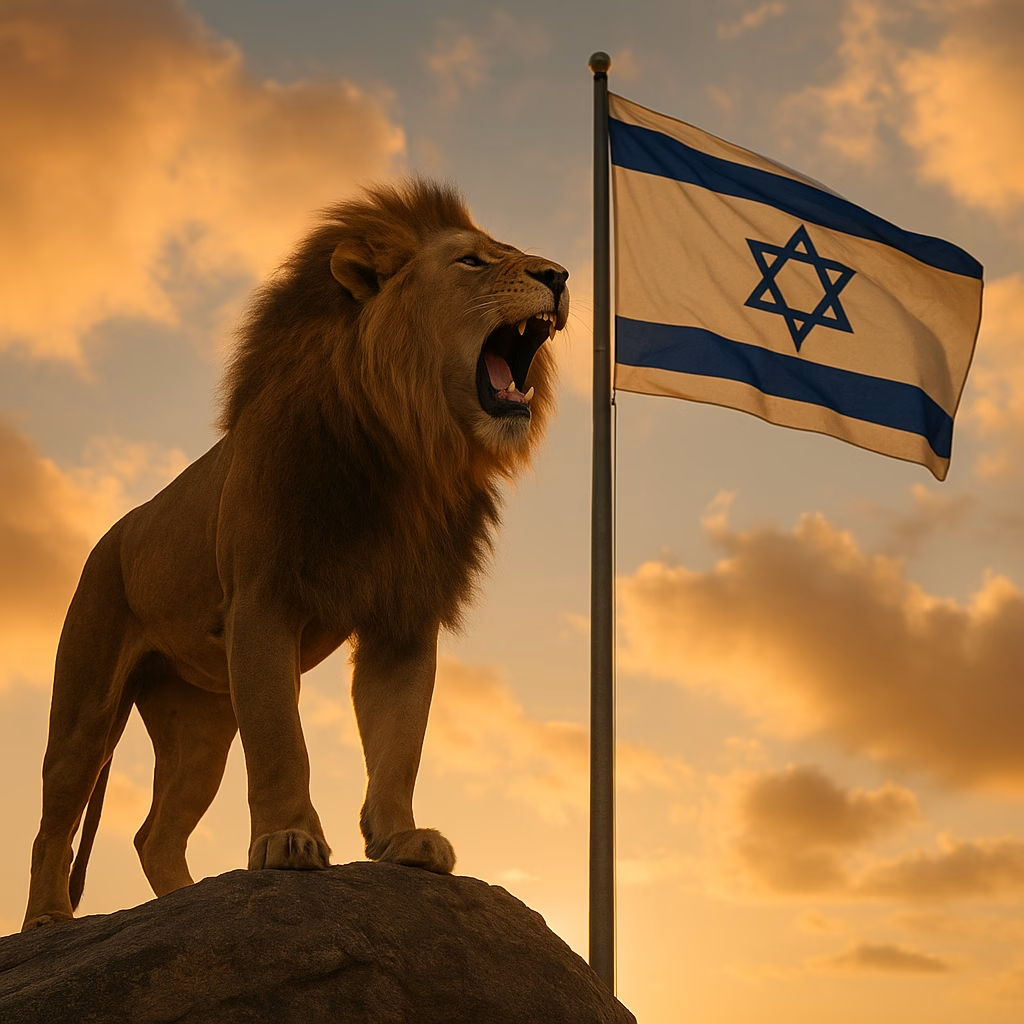
Israelis have every reason to celebrate the extraordinary achievements of the Israel Defense Forces (IDF) during Operation Rising Lion. In just 12 days, the IDF executed what will surely go down as one of the most surgically precise and strategically devastating operations in modern military history. More than half of Iran’s missile and launch capabilities were neutralized. Dozens of military leaders and nuclear scientists—key players in the Islamic Republic’s regional ambitions—were eliminated. Strategic regime facilities and even fortified nuclear plants were struck with devastating precision. And most remarkably, Israel accomplished all this without losing a single plane or soldier.
It is, without exaggeration, a military triumph that will be studied by scholars and strategists for generations to come.
And yet, it is not just an Israeli success story. The seamless coordination between the U.S. and Israeli militaries was on full display, most dramatically in the U.S.-led B-2 stealth bomber raids on Fordow, Natanz, and Isfahan. This was more than a display of firepower—it was a demonstration of alliance. The kind of unity in planning, intelligence-sharing, and execution that underscores not just military might, but mutual trust and shared purpose.
In my memoir, Ally: My Journey Across the American-Israeli Divide, I reflected on how the world views the U.S.-Israel alliance as a barometer of American strength and resolve. That notion has never been clearer than in the wake of Operation Midnight Hammer, as President Trump later dubbed it. From Riyadh to Ramallah, Beijing to Berlin, and certainly in Tehran, the message was unmistakable: The alliance is not only intact—it is formidable.
But now, as we turn from the afterglow of success to the uncertainties of the future, one question looms: How do Iran’s rulers perceive this war?
From Jerusalem and Washington, the answer seems self-evident—humiliation, shock, deterrence. After suffering such overwhelming losses, surely Iran’s Supreme Leader and the IRGC brass must be reeling, calculating, fearful of inviting another blow.
And yet, history warns us to be cautious in our assumptions.
The Iranian regime has long shown a capacity for absorbing pain, redirecting blame, and emerging from even catastrophic failures with a renewed commitment to its ideological vision. They may indeed be unnerved, but that doesn’t necessarily translate to long-term restraint. Deterrence is never a one-time achievement—it is a dynamic, ongoing process. The regime could very well double down on asymmetrical warfare, cyberattacks, or use proxies like Hezbollah and the Houthis to reassert strength without triggering a full-scale response.
Victory should never breed complacency.
As Israelis rightly celebrate the brilliance and bravery of the IDF, and Americans reflect on a renewed and robust alliance, we must keep our eyes open to what comes next. Iran’s silence in the aftermath may not signal surrender, but calculation. Retaliation, rearmament, or ideological hardening could follow.
In the days ahead, we must combine triumph with tenacity. Because while this round was decisively won, the long war for regional stability and security—for freedom over fanaticism—is far from over.