
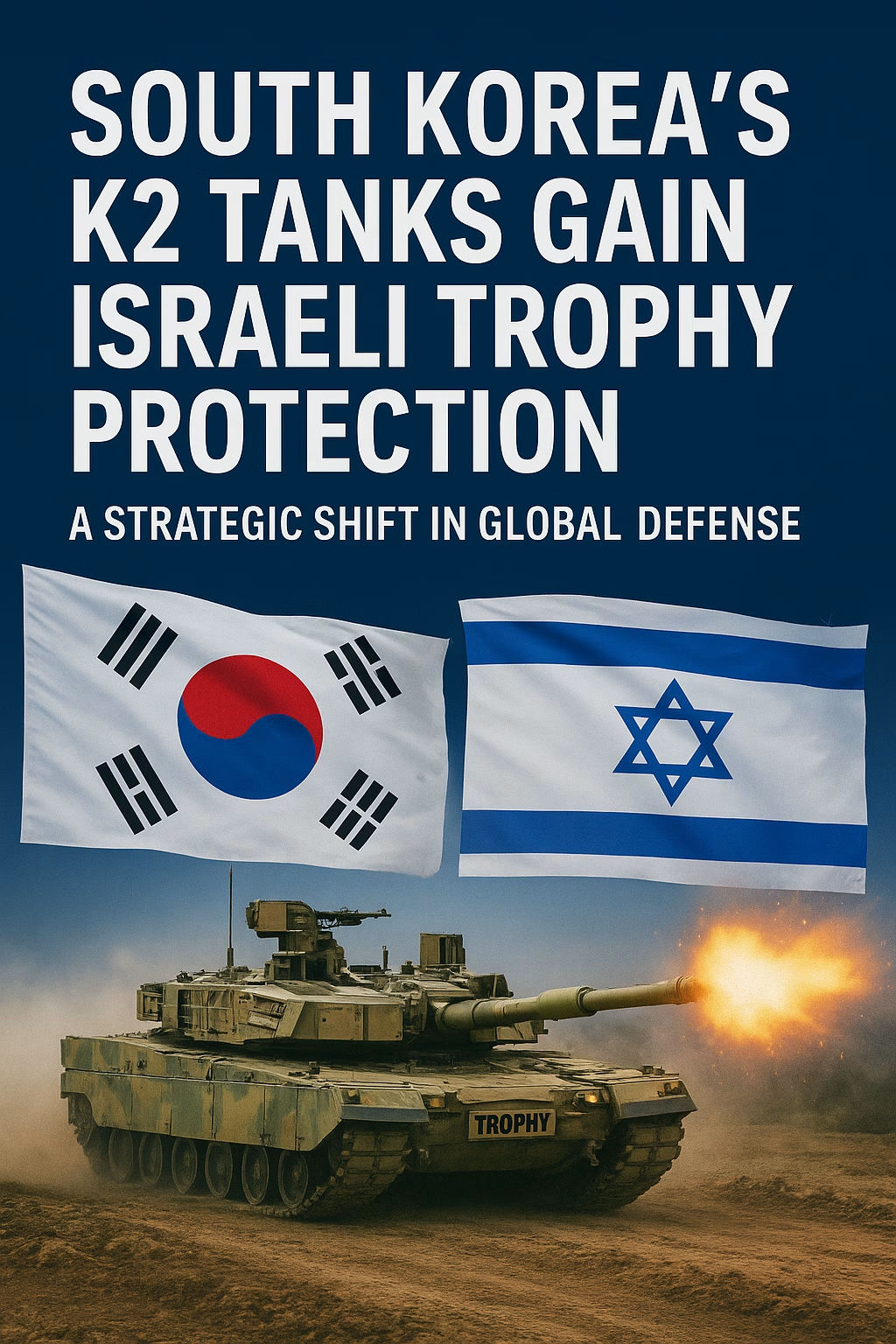
South Korea’s decision to integrate Israel’s Trophy active protection system into its K2 battle tanks marks more than just a technical upgrade—it’s a geopolitical statement. In an era when authoritarian powers are flexing their muscles, this partnership between Seoul and Jerusalem sends a clear message: democracies are preparing not only to deter aggression but to survive it.
The agreement, announced at the MSPO 2025 Defense Exhibition in Poland, ties together three important strands of today’s security environment. First, it highlights the growing reach of Israeli defense technology, already deployed on U.S. Abrams, British Challengers, German Leopards, and of course Israel’s own Merkava and Namer vehicles. Now, South Korea joins this elite club, recognizing that Trophy remains the only fully integrated active protection system fielded by NATO forces.
Second, the timing is no accident. This deal was unveiled just a day after China showcased its military might in a parade, and in the shadow of a summit uniting China, Russia, and North Korea. Against this backdrop, South Korea is reinforcing its tanks with a proven Israeli system that has saved lives on the battlefield. It’s a powerful counterpoint to the authoritarian bloc’s saber-rattling.
Third, the partnership underscores the increasingly global demand for Israel’s defense innovations—even as political controversies swirl. The upcoming DSEI exhibition in London will feature major Israeli companies, despite organizers barring official government representatives due to the war in Gaza. Yet, South Korea’s choice illustrates a larger truth: when nations face real threats, practical security partnerships outweigh diplomatic theatrics.
The inclusion of the K2PL—the version Poland is buying as part of its own 180-tank deal—further demonstrates that this is not just a South Korean project but a wider alignment among democratic nations seeking interoperability and resilience. Local production and co-development also ensure the partnership is more than transactional; it builds long-term ties in both defense industry and strategic trust.
As the world fractures into camps, with free nations on one side and revisionist powers on the other, the Trophy deal reminds us that technology and alliances are intertwined. South Korea, surrounded by threats from the North and watching China and Russia grow bolder, is betting on Israel. It’s a bet that signals confidence in Israel’s battlefield-tested innovation and in the broader democratic defense network.
In short, this is about more than tanks crossing rivers in training drills. It’s about democracies crossing into a new era of cooperation, determined to shield themselves—literally and figuratively—from the threats gathering at their gates.