
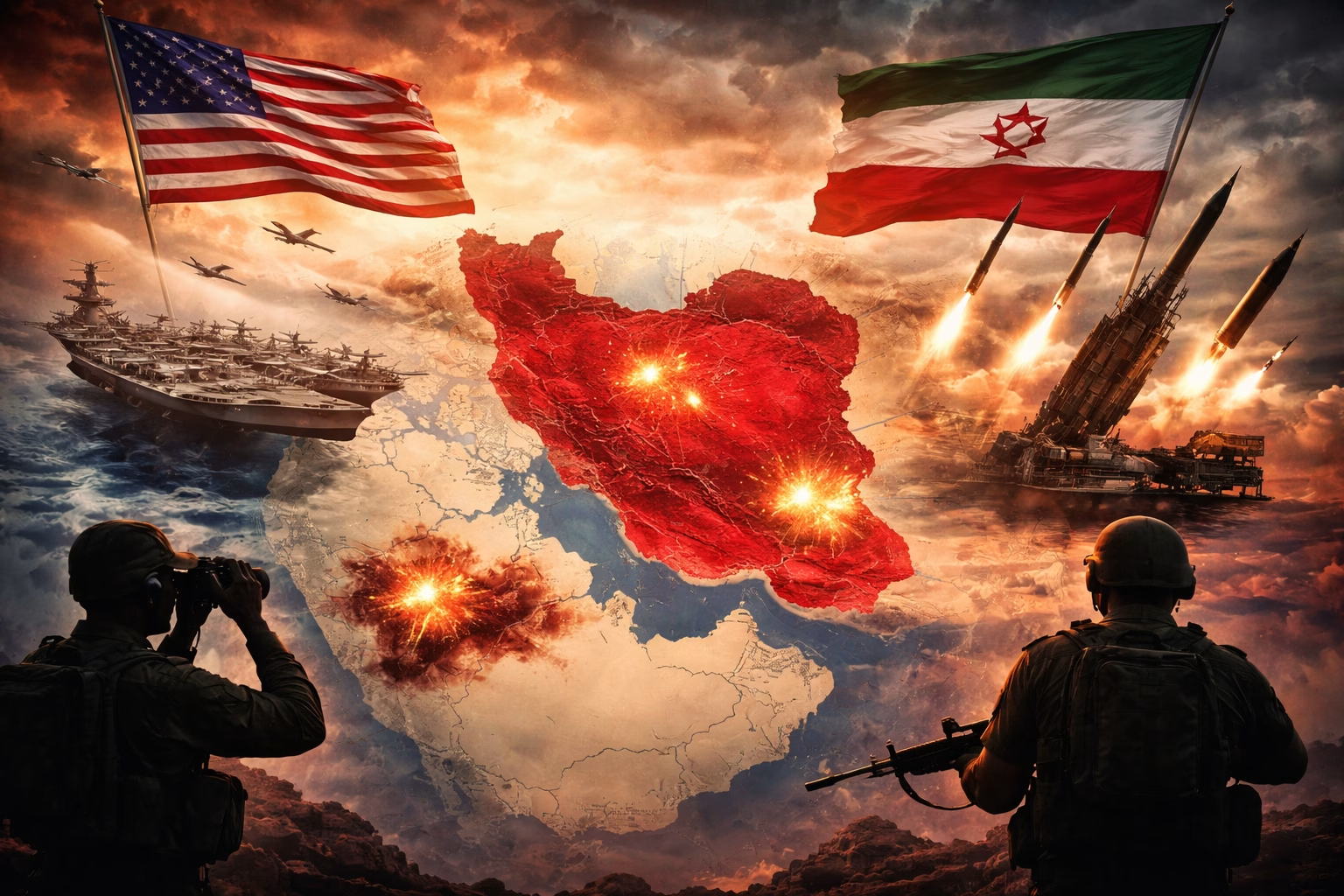
As Middle Eastern governments scramble to engineer an “off-ramp” between Washington and Tehran, the diplomatic paralysis now gripping the region is not the product of American brinkmanship—but of Iran’s long-standing refusal to abandon the tools of regional coercion that have destabilized the Middle East for decades.
Once again, the world finds itself trapped in a familiar cycle: Tehran accelerates nuclear enrichment, arms its proxies from Yemen to Lebanon, crushes its own civilians, and then demands concessions for simply refraining from further escalation. And once again, regional actors are pleading for negotiations that Iran has no real intention of honoring.
This time, the stakes are significantly higher. Iran enters the latest crisis weakened—not strengthened—by its own conduct. The regime is mired in unprecedented isolation, battered by mass protests, suffocating under sanctions, and reeling from the economic wreckage created by its nuclear adventurism. Yet rather than moderating, Iran has reverted to the same playbook it has relied on for twenty years: stall, threaten, blame others, and use violence as leverage.
A Diplomatic Fiction
Claims that diplomacy is being “blocked” because the United States demands too much fundamentally misread the reality. Washington’s requirements—zero enrichment, removal of the stockpile, limits on ballistic missiles, and curbing regional proxies—are not maximalist fantasies. They are the bare minimum required to prevent a nuclear-armed theocracy from holding the Middle East hostage.
Iran’s counter-demands, by contrast, are transparent fictions. Tehran insists it cannot negotiate “under pressure,” even though pressure is the only mechanism that has ever compelled it to talk. It insists on preserving unlimited enrichment, even though no responsible state would accept a nuclear-threshold Iran led by an openly expansionist regime. And it refuses any discussion of its missile program or terror proxies, despite their central role in regional instability from Gaza to the Red Sea.
The result is not a diplomatic impasse—it is a calculated Iranian strategy to run out the clock.
The Region Understands the Threat. Iran Does Not Care.
Egypt, Qatar, Oman, Saudi Arabia, and Turkey are all urging negotiations because they understand exactly what a U.S.–Iran confrontation could unleash. Yet they also know—though cannot always say aloud—that Iran itself is the obstacle. The regime thrives on brinkmanship. It uses the specter of conflict to rally hardliners, distract from domestic upheaval, and extract last-minute concessions from a risk-averse international community.
In this context, Iran’s warnings of “massive retaliation” are not signs of strength but signs of desperation. Confronted with an American carrier strike group, a collapsing economy, and unprecedented European resolve, Tehran is cornered. Its threats reveal fear, not confidence.
Israel’s Experience Is the Cautionary Tale
Israel has lived with Iran’s escalatory tactics for decades. It understands better than any nation that Tehran only negotiates when forced, only compromises when cornered, and only pauses its aggression when credible military consequences loom. Israel’s warnings to the world—often dismissed as alarmist—have instead proved consistently prescient.
Last spring’s 12-day war should have settled the debate. When the U.S. briefly aligned its messaging with Israel and placed real military pressure on Tehran, Iran blinked. When Washington eased that pressure later, Iran resumed enrichment, empowered proxies, and expanded its ballistic arsenal.
Pretending otherwise is a luxury Israel and America cannot afford.
The Real Off-Ramp: Confront Reality, Not Illusions
A genuine diplomatic off-ramp exists, but it requires recognizing three immutable facts:
- Iran does not respond to goodwill. It responds to force.
The regime has never made a concession absent intense political, economic, or military pressure. - Regional stability is impossible while Iran’s nuclear and proxy programs remain intact.
A nuclear-threshold Iran backed by Hezbollah, Hamas remnants, Iraqi militias, and the Houthis is not a partner for peace—it is the epicenter of instability. - Israel’s security is inseparable from broader regional security.
Weakening Iran’s capability to threaten Israel is the most direct way to prevent a broader regional war.
Diplomacy should always be on the table. But diplomacy that rewards Iran’s intransigence merely guarantees further escalation down the road. A deal that leaves Tehran with enrichment capabilities, regional militias, and ballistic missiles is not an off-ramp—it is a countdown.
Conclusion: Strength Is the Only Path to Peace
The Middle East is not hurtling toward war because the United States is too firm, but because Iran is not nearly constrained enough. The path to preventing conflict runs through clarity, not ambiguity; deterrence, not indulgence.
If the international community truly wants to avert a catastrophic confrontation, it must abandon the illusion that Iran can be coaxed into sanity through patience alone. Pressure—economic, diplomatic, and if necessary, military—is not the obstacle to peace. It is the only language the Iranian regime has ever understood.