
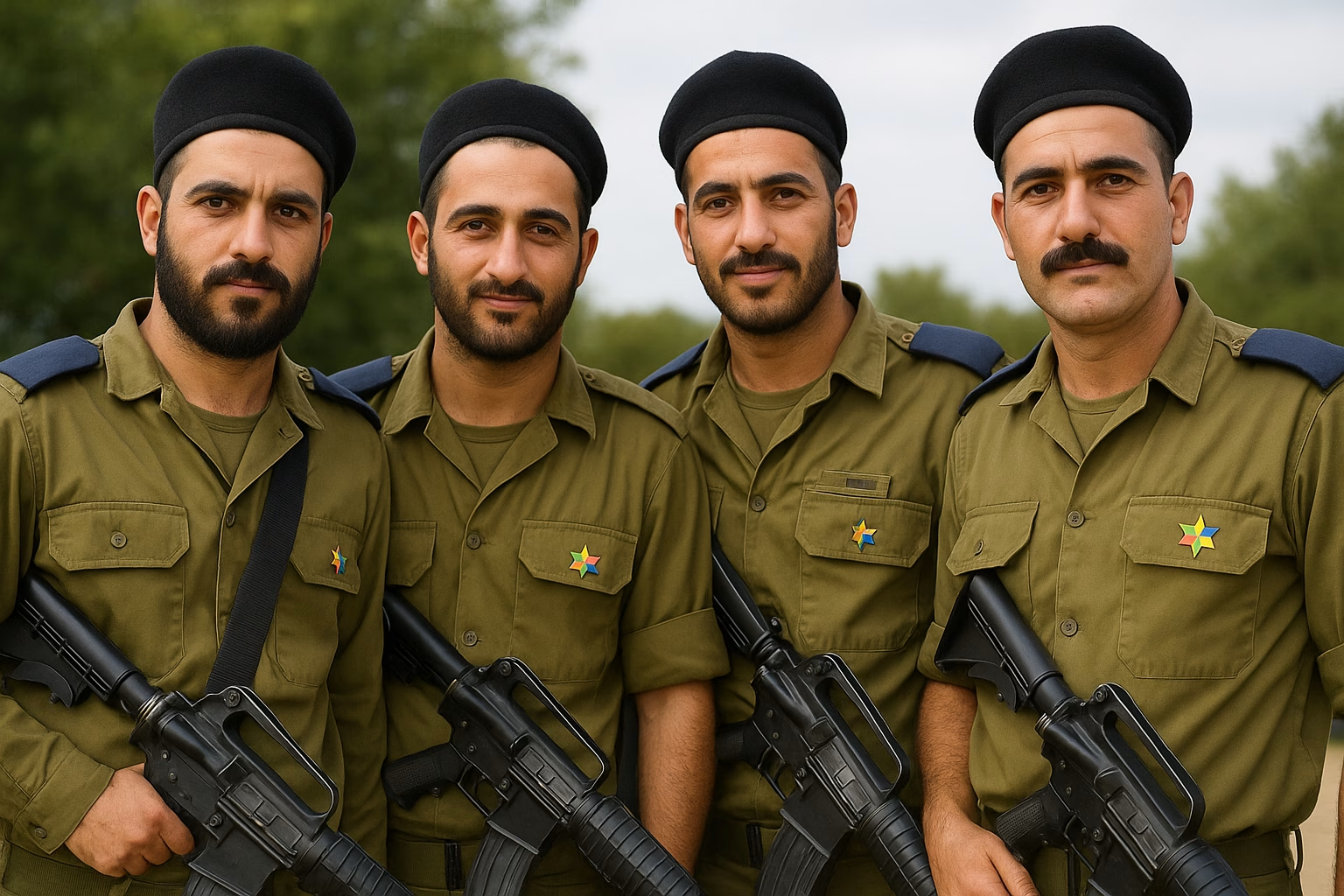
Last week’s massacre in Syria’s Sweida province sent shockwaves through the region. Dozens of Druze civilians—members of an ancient, loyal minority—were killed in a brutal campaign led by Sunni Bedouin tribes, backed by jihadist factions and, possibly, elements of the Syrian regime. Faced with the horror of executions, kidnappings, and mass violence just across its northern border, Israel did not look away. It acted—first with restraint, then with resolve.
The Israeli response was measured. Discreet warnings were issued to Damascus. Limited strikes targeted jihadist units in the Sweida region. Only when those warnings went unheeded did Israel escalate. A direct hit on the Syrian Ministry of Defense in Damascus—the first since 1973—proved effective. A ceasefire soon followed, brokered with American assistance through Secretary of State Marco Rubio and envoy Tom Barak.
Israel’s aim was not conquest, nor was it to undermine Syria’s sovereignty. It was to protect lives—particularly those of the Druze, a community with whom Israel shares a bond forged in both history and blood. For over seven decades, Israel’s Druze population has stood beside the Jewish majority, serving in the military, shaping public life, and enriching Israeli society. That alliance carries weight, especially when Druze lives are threatened.
Beyond moral obligation, Israel’s intervention in Sweida aligns with its core strategic interests. The region is becoming a battleground for competing forces: jihadist militias, Iranian operatives, and rogue tribal groups. Control of the southern Syrian corridor, with its smuggling routes and vulnerable minority enclaves, is at stake. The July 11 attack was not an isolated incident—it was a signal of a shifting, volatile balance of power.
Whether Syrian President Al-Sharaa lost control or turned a blind eye remains unclear. His public disavowal of the violence rings hollow in the face of regime inaction. Intelligence agencies must now assess whether the regime’s failure to intervene was strategic or symptomatic of internal disintegration.
Within the Druze community, fractures complicate the picture. Leaders like Sheikh Hikmat al-Hijri demand independence from Damascus and insist on maintaining local defense capabilities. Others, such as Sheikh Yusuf Jarbu’, take a more conciliatory stance, resisting external involvement. These divisions heighten the fragility of any ceasefire and the potential for renewed violence.
Israel’s objectives in Syria remain consistent:
- Shield its borders from terrorism and smuggling.
- Thwart Iranian military entrenchment near the Golan Heights.
- Safeguard vulnerable minorities like the Druze.
- Maintain lines of communication with Damascus.
- Push back against Turkish expansionism in southern Syria.
- Preserve credibility with allies in Washington, the Gulf, and beyond.
What sets this operation apart is Israel’s restraint. The escalation was neither reckless nor impulsive. It was deliberate, communicated in advance, and grounded in proportionality. The strike on Damascus sent a clear message: state-sanctioned or tolerated atrocities against civilians—especially against longstanding allies like the Druze—will not be ignored.
Still, the end goal is not war, but stability. Israel has laid out clear terms for further dialogue with Syria: protect minority rights, halt regime and jihadist deployments in the south, uphold the ceasefire, and prosecute those behind the massacre.
Now comes the diplomatic challenge. Force, however precise, cannot substitute for a regional strategy. Israel should take the lead in forming a coalition—with the U.S., Saudi Arabia, the UAE, and Turkey—to marginalize extremists, stabilize southern Syria, and prevent future atrocities.
This is not about dominance. It is about responsibility. In Syria, as in the broader region, Israel is demonstrating that power must serve principle—that strategic necessity and moral clarity are not mutually exclusive.